


CBD Oil
CBD oil is an extract made from the flowers and leaves of the industrial hemp plant, mixed with a carrier oil. The THC content in all products in this range is no more than 0.2%, which means they comply with Dutch law and are legal in most of Europe. It won’t get you high. The range goes from 2.5% CBD for beginners to 10% for those who want to take a higher daily dose with fewer drops. In addition to CBD oil, CBG oil and an olive oil-based variant are also available.
6 Items
How is CBD oil made?
CBD oil starts with the flowers and leaves of the industrial hemp plant (Cannabis sativa L.). The CBD-rich extract is extracted from the plant material using CO₂ extraction or ethanol extraction. The extract is then diluted with a carrier oil, most commonly hemp seed oil, MCT oil, or olive oil. The final product is a clear to dark oil with a specific CBD percentage per milliliter.
Raw CBD oil is made without any further heating step after extraction, which means that in addition to CBD, cannabinoids such as CBDa (cannabidiolic acid) and other plant compounds are preserved. Regular CBD oil undergoes a decarboxylation process in which CBDa is converted to CBD. Which variant you choose depends on personal preference: some users prefer the more complete profile of raw oil, while others prefer a purer CBD extract.
Products in this range
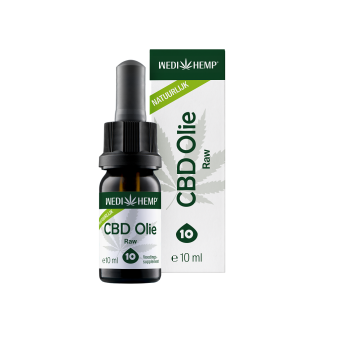
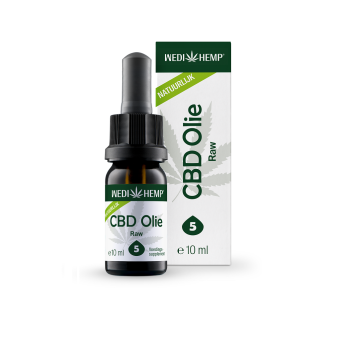
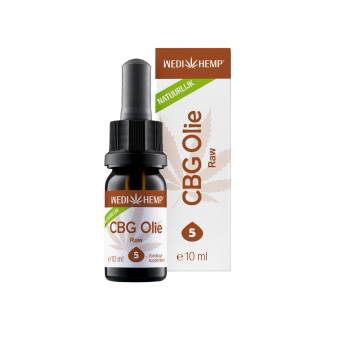
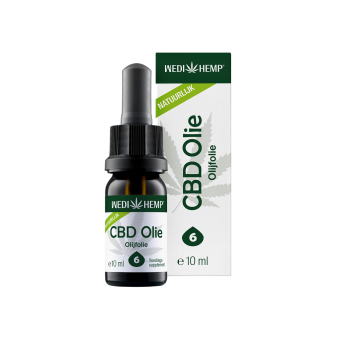
The majority of the range consists of products from Wedihemp (formerly Medihemp), an Austrian producer that works with organically grown hemp. The CBD Oil Raw 2.5% is the entry-level product, suitable for people trying CBD for the first time. The CBD Oil Raw 5% is the most commonly used concentration for daily use. For a higher daily dose in fewer drops, the CBD Oil Raw 10% is the most efficient choice. As an olive oil-based alternative, the CBD Oil 6% is available, with a milder taste than the hemp seed oil variants.
In addition, there is CBG Oil 5% from Wedihemp. CBG (cannabigerol) is another cannabinoid from the hemp plant that occurs in smaller quantities than CBD but has its own unique profile of effects. CBG and CBD can also be used in combination.
How do you use CBD oil?
The most common method of administration is sublingual: place a few drops of the oil under your tongue and hold it there for 60 to 90 seconds before swallowing. CBD is absorbed more quickly through the oral mucosa than through the digestive system. You can also mix CBD oil into a drink or food, but absorption is slower and less efficient this way.
There is no universally correct dosage. A common starting point is 5 to 10 mg of CBD per day, which amounts to two to four drops of a 5% oil. Build up the dose slowly and pay attention to your body’s reaction. If you are taking medication, always consult a doctor first, as CBD can affect the effectiveness of certain medications through the CYP450 enzyme system in the liver.
Storing CBD Oil
Store CBD oil in a cool, dark place, away from direct sunlight and heat sources. A refrigerator or dark kitchen cabinet at room temperature is sufficient. Once opened, the shelf life is typically 6 to 12 months, depending on the carrier oil and the brand. Shake the bottle well before use, as CBD extract can settle.
Frequently Asked Questions About CBD Oil
What is the difference between raw CBD oil and regular CBD oil?
Raw CBD oil contains not only CBD but also CBDa and other cannabinoids that break down when heated. Regular CBD oil is decarboxylated: all CBDa has been converted to CBD, resulting in a higher CBD content per drop but a narrower plant profile. Which variant works depends on the individual; both are legal and safe to use.
How many drops should I use?
That varies by product and by person. As a guideline: a 10 ml dropper bottle contains approximately 200 drops. In a 5% oil, there is approximately 2.5 mg of CBD per drop. A starting dose of 5 mg per day amounts to two drops. Always read the package insert for the specific product and adjust the dose based on your own experience.
Is CBD oil legal in the Netherlands?
Yes. CBD oil containing up to 0.2% THC is legal in the Netherlands under the Opium Act. All products in this range comply with this standard. If you’re taking your CBD oil abroad, check the local regulations. Some countries have stricter rules regarding CBD products.
Can I also take CBD oil in capsules?
Yes. If you prefer to avoid the taste of CBD oil or want a fixed dosage per intake, CBD capsules are an alternative. Capsules are absorbed through the digestive system, which is slower than sublingual intake but more practical for some users.

