
Last updated: March 25, 2026
One of the most frequently asked questions from people interested in magic mushrooms and magic truffles is exactly what the legal situation is. This is understandable, as the laws surrounding psilocybin aren’t always logical and have some notable exceptions. Below, you can read all about the legal status of magic mushrooms, truffles, and grow kits in the Netherlands, including the current state of affairs.
Are you unsure whether a product in our smartshop is legal? All products sold by Dutch-Smart are fully legal in the Netherlands.
In short: what is allowed and what is not?
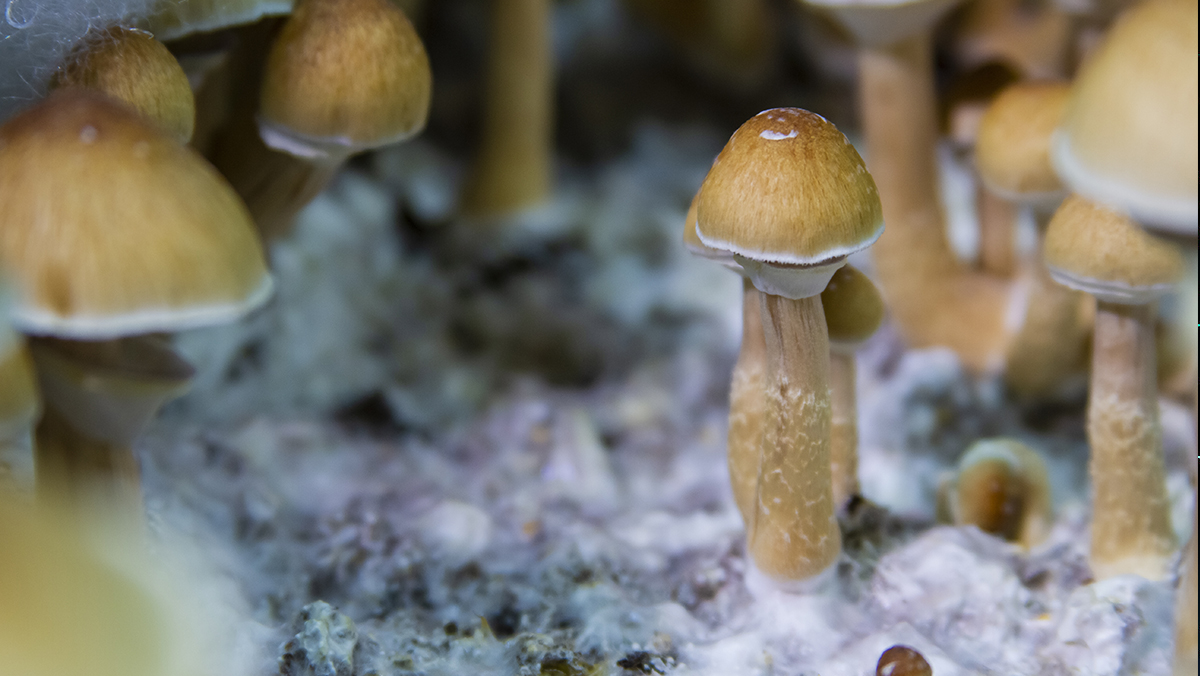
- Psilocybin-containing mushrooms (magic mushrooms) may not be sold in the Netherlands, neither fresh nor dried
- Psilocybin-containing sclerotia (magic truffles) may be sold
- Magic mushroom grow kits are permitted in the Netherlands; you may grow your own magic mushrooms
- Reselling home-grown magic mushrooms is not permitted
- Magic truffles and grow kits are exclusively for persons 18 years of age and older
The international framework: the 1971 UN Convention
Magic mushrooms are banned in most countries around the world under the Convention on Psychotropic Substances, an international treaty drafted by the United Nations in 1971. More than 183 countries have signed it.1 Member states determine for themselves how to transpose this convention into national law, which explains the significant differences between countries.
Psilocybin and psilocin are listed on Schedule I of the convention: the category for substances with a high potential for abuse and no internationally recognized medical use. An important detail that is often overlooked: the convention prohibits the substances, not the organisms that contain them. The commentary on the Convention explicitly states that plants and mushrooms containing psychotropic substances are not subject to international control, as long as the active substance has not been extracted or synthesized. The roots of Mimosa hostilis, peyote cacti, and psilocybin mushrooms are specifically mentioned as examples that fall outside the scope of the convention.
Magic mushrooms in the Netherlands: from tolerated to banned
Magic mushrooms only became truly popular in the Netherlands in the 1990s. In 1993, the first Dutch smart shop opened, marking the beginning of the legal sale of fresh mushrooms. That sounds strange, because psilocybin was already on Schedule I of the Opium Act at that time. The explanation lies in a legal argument that stems from a Supreme Court ruling on khat.
The Supreme Court had ruled that fresh khat leaves, despite containing cathinone (a substance listed under the Opium Act), could be sold freely.2 The reasoning: the Opium Act prohibits the substance, not the plant that contains it. The same logic was applied to fresh magic mushrooms. Dried magic mushrooms were subject to the law (because drying was considered “processing”), but fresh ones were not. As a result, fresh magic mushrooms were sold legally in smart shops for years.
December 1, 2008: the ban
In 2006 and 2007, a number of incidents occurred involving tourists who had used magic mushrooms. The most well-known case involved a young woman who fell out of a window in Amsterdam in 2007 after using magic mushrooms. These incidents led to political pressure.
As of December 1, 2008, then-Minister of Health Ab Klink banned the sale of all mushrooms with hallucinogenic effects, both fresh and dried.3 Since then, psilocybin-containing mushrooms have been listed on Schedule II of the Opium Act. The active substances psilocybin and psilocin are listed on Schedule I.4
Magic truffles: why are they legal?
When the ban was introduced in 2008, the law explicitly referred to “mushrooms with hallucinogenic effects.” Botanically speaking, magic truffles are not mushrooms but sclerotia: underground storage organs formed by the mycelium in response to environmental stress. Because sclerotia do not fall under the definition of “mushroom,” they were not included in the ban.
This is despite the fact that magic truffles contain the same active substances as magic mushrooms—psilocybin and psilocin—and their effects are very similar. In 2014, the Ministry of Health, Welfare and Sport asked the Coordination Point for Assessment and Monitoring of New Drugs (CAM) to prepare an information report on sclerotia. The report defined sclerotia as “a solid mass of hardened fungal mycelium that grows underground and is part of the hallucinogenic mushroom,” which, from a scientific standpoint, argues for classification under Schedule II. However, the legal conclusion remained unchanged: truffles are not formally covered by the Opium Act.
The sale of magic truffles through Dutch smart shops has since been de facto regulated. Products are sold as fresh sclerotia (dried truffles would create a gray area again) and are exclusively for individuals 18 years of age and older. As long as the Commodities Act does not include specific regulations for the sale of sclerotia, the NVWA enforces existing food safety legislation.
Magic mushroom grow kits: legal cultivation
The 2008 ban targets the sale and possession of psilocybin-containing mushrooms. Grow kits do not contain fully grown mushrooms but rather mature mycelium (and in the case of spore syringes: spores that do not themselves contain psilocybin). The law prohibits the mushroom, not the grow kit. This makes the purchase and possession of grow kits legal.
Once the grow kit has produced mushrooms, the situation enters a legal gray area. Strictly speaking, the cultivated mushrooms contain psilocybin and are therefore Schedule II substances. In practice, home cultivation for personal use is tolerated. Resale is explicitly prohibited.
The Dutch-Smart product range includes grow kits from various brands and types: the 100% mycelium FreshMushrooms kits, the XL grow kits, Funglandia, and Royale Flush. All necessary growing supplies, spore syringes, and spore vials are also available.
NPS Act as of July 1, 2025
On July 1, 2025, the New Psychoactive Substances Act (NPS Act) came into effect in the Netherlands. With this law, the government no longer bans individual substances, but entire groups of substances that are chemically related to known drugs. The NPS Act has direct consequences for MDMA analogs (such as 6-APB, MDA, and methylon), which now fall under Schedule I. Nothing changes for psilocybin-containing truffles: fresh sclerotia are not “new psychoactive substances” and are not covered by the NPS Act. Grow kits are also unaffected. The NPS Act also adds HHC, 2-fluorodeschloroketamine, and various synthetic opioids to Schedule I.5
Psilocybin and science: a changing landscape
The legal classification of psilocybin stands in increasing contrast to scientific developments. Universities such as Johns Hopkins, Imperial College London, and the University Medical Center Groningen are conducting clinical research on psilocybin as a treatment for treatment-resistant depression, anxiety disorders, and addictions.
Compass Pathways completed two Phase 3 studies in 2025–2026 using synthetic psilocybin (COMP360) for treatment-resistant depression, with positive results. Following a positive meeting with the FDA, the company expects an approval decision by late 2026 or early 2027. If COMP360 is approved, it will become the first psilocybin-based drug on the market.6 In the U.S., psilocybin has held FDA Breakthrough Therapy designation for treatment-resistant depression since 2018. Oregon legalized psilocybin for therapeutic use in 2020 (Measure 109), and Colorado followed in 2022 (Proposition 122). The Czech Republic is on track to become the first EU country to make medicinal psilocybin available, possibly in early 2026.
In the Netherlands, the OPEN Foundation is working on the development of psilocybin-assisted therapy and maintains contact with the Ministry of Health, Welfare, and Sport. The legal classification on Schedule I formally stands in the way of free research, but research can take place through an exemption process. It is not inconceivable that legislation regarding psilocybin in the Netherlands will change in the coming years, but at present, the ban on magic mushrooms remains in full force.
Legality in other countries
For those who travel or are curious about the situation outside the Netherlands, here is a brief overview:
- Netherlands: Magic truffles legal, magic mushrooms prohibited, grow kits legal
- Jamaica: Psilocybin is not regulated, magic mushrooms are legal
- Portugal: All drugs decriminalized for personal use (2001 law). Not legal, but not subject to criminal prosecution
- Czech Republic: Medicinal psilocybin in development, expected availability for doctors in early 2026
- Austria: Grow kits are legal; fresh use is in a legal gray area
- US: Federally prohibited (Schedule I). Oregon and Colorado have legalized psilocybin for therapeutic use
- Belgium, Germany, France, UK: Prohibited, including cultivation kits in some cases
Always check the current laws of the country where you are staying. The situation is changing rapidly.
Frequently Asked Questions
Can I take magic truffles abroad?
No. Psilocybin is covered by the 1971 UN Convention, and the cross-border transport of psilocybin-containing products is illegal internationally, even if the products were legally purchased in the Netherlands. Purchase and use truffles exclusively in the Netherlands.
Is the possession of magic mushrooms a criminal offense?
Yes. Psilocybin-containing mushrooms are listed on Schedule II of the Opium Act. Possession is a criminal offense, even for small quantities. If arrested, you risk a fine or criminal prosecution, depending on the quantity and circumstances.
What is the difference between tolerance and legality?
Tolerance means that an offense is technically prohibited, but that the authorities do not actively enforce it. Legal means that something is permitted by law. Magic truffles are legal: there is no legal ban on them. Growing your own magic mushrooms for personal use falls into a gray area that is tolerated in practice.
Can I buy magic truffles as a minor?
No. Magic truffles and all psychoactive products in the Dutch-Smart range are exclusively for individuals 18 years of age and older.
Does the NPS Act change the status of truffles?
No. The NPS Act, which took effect on July 1, 2025, targets synthetic substance groups that are chemically related to known drugs. Fresh psilocybin-containing sclerotia (truffles) are not new psychoactive substances and are not covered by this law. Grow kits are also unaffected.
Sources
About the author

Editor
Derek writes for Dutch Smart about smart shop products, cultivation techniques, and harm reduction. He combines practical experience with factual, well-researched information, without hype or vague promises.


