

Last updated: March 4, 2025
Sclerotia are not truffles in the culinary sense, nor are they ordinary mushrooms; rather, they are a distinct structure produced by certain types of fungi as a survival mechanism. Because they contain psilocybin and psilocin and are legal in the Netherlands, they are sold in smart shops as magic truffles. Below, you can read about what sclerotia are botanically, how the active compounds work, what to expect, and how to use them responsibly.
What are sclerotia?
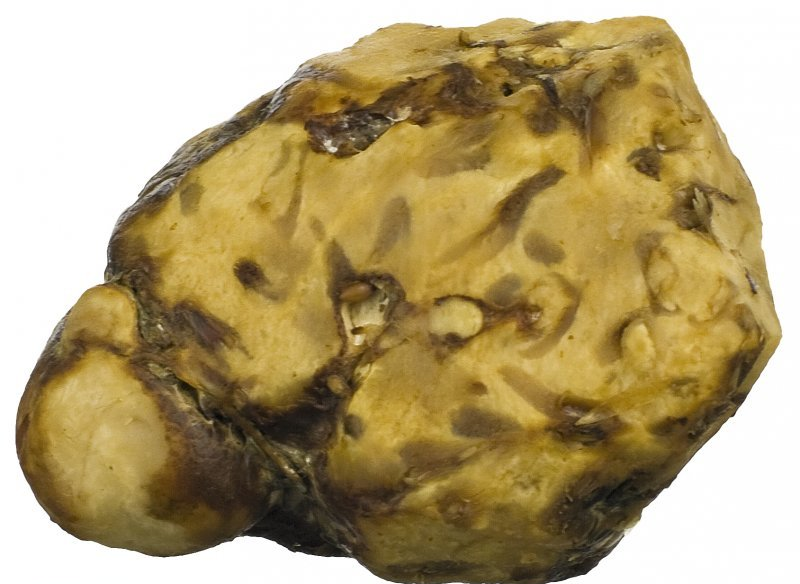
When growing conditions for a fungus—such as Psilocybe tampanensis or Psilocybe atlantis —are unfavorable, the mycelium forms compact, hard structures as food reserves: sclerotia. As soon as conditions improve, the fungus uses the stored nutrients to form mushrooms after all. Sclerotia are therefore not fruiting bodies but underground reserve organs, comparable to a bulb or tuber in plants.
Botanically speaking, sclerotia are therefore neither mushrooms nor truffles. The name "magic truffle" is a trade term that has stuck, partly because the 2008 ban on psilocybin-containing mushrooms explicitly referred to "mushrooms," and sclerotia thus fell outside the definition. However, they contain the same active compounds as magic mushrooms: psilocybin and psilocin.
Active compounds: psilocybin and psilocin
Psilocybin is the primary compound in sclerotia. After ingestion, it is rapidly converted to psilocin via dephosphorylation in the gastrointestinal tract. Psilocin is the pharmacologically active form: it binds as a partial agonist to 5-HT2A serotonin receptors in the brain, particularly in the prefrontal cortex. This disrupts the normal processing of sensory information and leads to the characteristic visual, auditory, and cognitive effects.¹
The psilocybin content varies by species. Magic truffles generally range from 0.5% to 1.5% psilocybin on a dry weight basis, depending on the strain and batch. This explains why the intensity of the experience varies noticeably by strain—something to keep in mind when choosing and dosing.
Effects and what to expect
The effects of sclerotia typically begin 20 to 60 minutes after ingestion and peak after 1 to 2 hours. The total duration of effects averages between 4 and 6 hours. The experience depends heavily on dose, strain, individual sensitivity, and the environment in which you use it.
At low to moderate doses, users describe heightened color perception, a sense of connection, mild visual distortions, cheerfulness, and deepened conversations. At higher doses, the visual and cognitive effects increase, and the perception of time can change significantly. A challenging experience (“bad trip”) is not uncommon and is primarily caused by a tense state of mind, an unfamiliar environment, or an excessively high starting dose.
Dosage
Sclerotia are sold fresh and dosed based on fresh weight. The guidelines below serve as a starting point; the exact effect varies by species and individual.
| Dose | Fresh weight | Expected effect |
|---|---|---|
| Mild | 5–7 grams | Subtle mood, mild visual effects |
| Medium | 7–12 grams | Noticeable visual and cognitive effects |
| Strong | 12–15 grams | Intense trip, not recommended for beginners |
Use Dutch-Smart’s Magic Truffles calculator for personalized dosage advice based on body weight and experience. Start with a low dose on your first use and take them preferably on an empty stomach—absorption will be more even and faster.
Harm reduction and safe use (18+)
Magic truffles are legal in the Netherlands and fall outside the scope of the Opium Act, but that doesn’t make responsible use any less important. The active ingredients are potent, and the experience can be unexpectedly intense.
- Tripsitter: Always have a sober person present throughout the session. A tripsitter can intervene if the experience becomes overwhelming and prevent you from making unsafe decisions.
- Set and setting: Start in a familiar, quiet environment. Avoid crowded or unfamiliar places, especially on your first use.
- No alcohol: Alcohol amplifies and alters the effects unpredictably. Drink water or herbal tea, but no alcohol during or immediately after the session.
- No combinations: Do not combine magic truffles with other drugs, SSRI antidepressants, or lithium. Combining with lithium increases the risk of seizures.
- Psychiatric contraindications: Do not use if you have a personal or family history of psychosis, schizophrenia, or bipolar disorder.
- Age restriction: For individuals 18 years of age and older only.
More information on safe use, strain descriptions, and dosage can be found in the Dutch-Smart knowledge base.
Available varieties
Dutch-Smart sells magic truffles of various strains, each with its own potency profile. From mild and accessible for beginners to potent for experienced users. View the full magic truffle assortment for an up-to-date overview of available varieties, weights, and prices. Want to grow your own truffles? You can with a truffle grow kit.
Frequently Asked Questions
Are magic truffles the same as magic mushrooms?
No. Magic truffles are sclerotia, the fungus’s underground storage organs. Magic mushrooms are the fruiting bodies that grow above ground. Both contain psilocybin and psilocin, but magic truffles are legal in the Netherlands and magic mushrooms are not. Read more in our article about the difference between magic mushrooms and magic truffles.
How long does psilocybin stay in your body?
Psilocin breaks down relatively quickly: most of the active substance is gone from the blood within 6 to 8 hours. Detection time in urine can be up to 24 hours after use, sometimes longer with high doses. You can read more about this in our blog on how long psilocybin stays in your body.
What should I do if I have a bad trip?
Change your surroundings, calmly reach out to your trip sitter, and remember that the effects are temporary. Sugar (a glass of orange juice or a sugar cube) can slightly lessen the intensity. Avoid panic and don’t force yourself to move or be in a crowded place. You can find more tips in our blog about what to do during a bad trip.
Sources
Carhart-Harris, R. & Nutt, D. (2017) — Serotonin and brain function: a tale of two receptors, Journal of Psychopharmacology, NCBI
About the author

Editor
Derek writes for Dutch Smart about smart shop products, cultivation techniques, and harm reduction. He combines practical experience with factual, evidence-based information, without hype or vague promises.


