


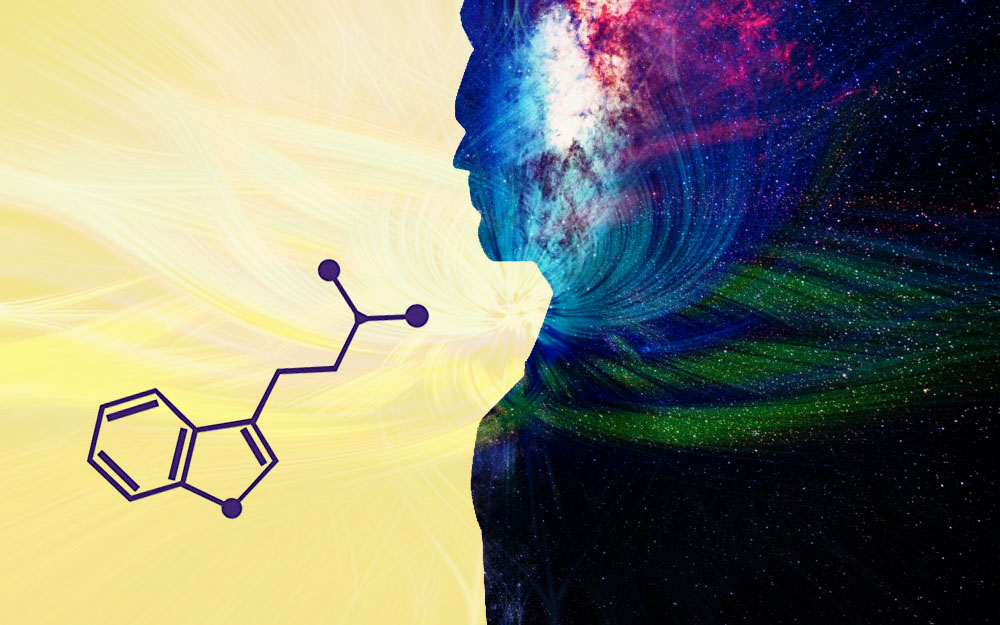
Here at Dutch-Smart, we discuss a wide variety of psychedelics, from LSA seeds to the hallucinogenic absinthe. But when we consider the absolute pinnacle of psychedelic experiences, we can’t help but conclude that DMT is the most spectacular. The substance is found in yopo seeds, among other things, but also in the potent Amazonian brew ayahuasca.
Human consciousness
Currently, various organizations are conducting research on this potent substance, but we are particularly curious about the many speculations regarding endogenous DMT and visionary states such as near-death experiences, mystical experiences from meditation, and dreams. Several recent findings suggest the likelihood that DMT plays a key role in normal human consciousness and our perception of reality—and that’s quite remarkable.
DMT is an abbreviation for the chemical dimethyltryptamine. This compound is best known for its hallucinogenic properties and transformative effects following inhalation or oral ingestion via, for example, ayahuasca. The popularity of discussions surrounding DMT has further increased following the release of Dr. Rick Strassman’s book and documentary titled DMT: The Spirit Molecule. Today, many celebrities have used this unique substance, including heavyweight boxing champion Mike Tyson, who described his 5-MeO-DMT experience as one of the most extraordinary experiences of his life.
In recent decades, conflicting data and disagreement within the scientific community regarding endogenous DMT (produced by the body) led some to question whether this substance could be produced in the human brain. The prevailing theory among many scientists was that the lungs served as the primary source of DMT in the human body, but recent DMT studies at the University of Michigan have completely changed this. Researchers discovered that circulating brain levels of DMT in laboratory animals (rats) are within the same range as those of the common neurotransmitters serotonin, dopamine, and norepinephrine.
DMT and Near-Death Experiences
Although these studies confirm that DMT is present in the brain, that says nothing about the extent to which the substance is related to the near-death experiences often associated with it. Nevertheless, earlier studies have confirmed that the two might well be linked. A 2015 study measuring changes in neurotransmitter release levels in the brain before, during, and immediately after cardiac arrest found that serotonin levels increased by as much as 7,000% when a person died. Based on data from recent DMT studies showing levels comparable to those of common neurotransmitters, it seems a reasonable hypothesis that DMT likely plays a role in near-death experiences. And this is also supported by studies: In the most recent DMT research from the University of Michigan, researchers observed a nearly 300% increase in DMT in the visual cortex 15 to 30 minutes after cardiac arrest. Is it possible that DMT causes so-called visions or hallucinations when someone dies? Some scientists think so.
Is reality an illusion?
We know that when we take DMT, our perception of everything around us changes completely. But what does this mean for the DMT that is already present in our bodies? If DMT is produced in quantities as large as, say, serotonin, does that mean our reality is actually one big illusion or distortion? Neuroscientist Dr. Anil Seth has a popular TED Talk on YouTube titled “Your Brain Hallucinates Your Conscious Reality.” In this presentation, Seth gives examples of how people use recognition patterns to form a perception of reality. He stated: “We don’t just passively perceive the world; we also actively generate it. The world we experience comes just as much from within as from without.”
This recent study from the University of Michigan appears to have provided a biochemical basis for Dr. Seth’s idea that the brain hallucinates conscious reality. And if reality is indeed a “hallucination,” then the visions reported from near-death experiences may be just as real as anything else people perceive during “normal” states of consciousness.


