


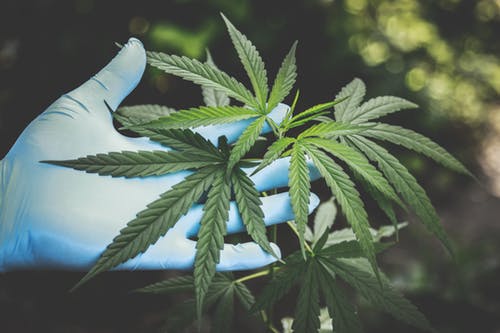
Today, more than 150 million people smoke cannabis regularly. This undoubtedly makes it one of the world’s most popular recreational drugs. Yet the question has always been: when did people first start smoking this magical green plant? New research has revealed the oldest known use of marijuana, after scientists analyzed the archaeological remains of a burial site in the Pamir Mountains in China using forensic technology. The findings were published this week in the journal Science Advances.
If reading this article has made you crave this special green herb, check out our headshop to get everything you need to enjoy cannabis!
Chemical Properties
A team led by archaeologists Yang Yimin and Ren Meng of the Chinese Academy of Sciences in Beijing reports clear physical evidence that people in mourning smoked cannabis approximately 2,500 years ago for its intoxicating properties. The study is based on new techniques that allow researchers to identify the plant’s chemical properties and even evaluate its potency. “We are in the midst of a very exciting period,” says team member Nicole Boivin of the Max Planck Institute for the Science of Human History (MPI-SHH) in Jena, Germany. The article is part of a broader effort to trace how the drug spread across the burgeoning Silk Road, on its way to becoming the popular drug it is today.
“Archaeologists thought that cannabis was already being smoked ritually in Central Asia 5,000 years ago, but new analyses of plant remains disprove that.”
A previously published pollen study showed that cannabis evolved on the eastern Tibetan Plateau about 28 million years ago. More than 4,000 years ago, Chinese farmers began cultivating it for oil and to produce fibers for rope, clothing, and paper. But it proved much more difficult to determine when the plant was used for its psychoactive effects. Archaeologists thought that cannabis was already being smoked ritually in Central Asia 5,000 years ago, but new analyses of those plant remains by other teams suggest that early cannabis varieties had such low levels of tetrahydrocannabinol (THC) that they were not psychoactive at all. An academic working in Central Asia said that he and his colleagues tried smoking this “ancient” cannabis strain but did not get high at all.
Burning fire pits
But that was completely different with the cannabis found in the 2,500-year-old Jirzankal burial site, 3,000 meters high in the Pamir Mountains in western China. Excavations have uncovered skeletons and wooden plates, bowls, and Chinese harps, as well as wooden fire pots containing burning material. They are all characteristic of the Sogdians, a people from Western China and Tajikistan who generally followed the Persian religion of Zoroastrianism, which later celebrated the mind-altering properties of cannabis in sacred texts. The presence of glass beads typical of West Asia and silk from China confirms the long-distance trade for which the Sogdians became famous, and isotope analysis of 34 skeletons showed that nearly a third were migrants. In addition, cannabis with unusually high THC levels was found in wooden fire pots. The study’s conclusion: People in the region used cannabis as part of their mourning process.
“It is clear that the plant has a long history of human use—medicinal, ritual, and recreational—spanning countless millennia.”
“Modern perspectives on cannabis vary enormously across cultures, but it is clear that the plant has a long history of human use—medicinal, ritual, and recreational—spanning countless millennia,” said Robert Spengler, an archaeobotanist at the Max Planck Institute for the Science of Human History in Jena, Germany, who worked on the study.“We can piece together a picture of funeral rituals involving flames, rhythmic music, and hallucinogenic smoke, all intended to induce an altered state of consciousness,” the authors wrote in the study.
High THC Levels
One of the questions raised by the findings is how and why mourners chose cannabis with higher THC levels. Wild cannabis, which typically grows in the well-watered foothills of the mountains in Central Asia, usually has low levels of cannabinol, a metabolite of THC, the researchers wrote. Instead, these higher THC levels suggest that “people may be cultivating cannabis and actively selecting for stronger strains,” they added.
The researchers do note, however, that this discovery does not suggest that ancient Chinese populations were engaged in recreational drug use. Instead, it was likely a spiritual practice—intended to guide the dead into the afterlife and assist the living community through the presence of gods or the spirit of the deceased.


