


Few people realize that the fungal kingdom includes a vast number of medicinal species. Did you know that there are an estimated 10 million species of mushrooms? Here at Dutch-Smart, we often talk about the psychedelic varieties, but there are also a number that are widely used for their medicinal effects.
There are many types of mushrooms with beneficial properties. Mushrooms can help boost immunity and increase your libido, but they can also help you achieve greater concentration or a clear mind. Today we’re going to take a closer look at the so-called “Royal Family” of mushrooms: Lion’s Mane, Turkey Tail, Reishi, Chaga, and Cordyceps.
Mushrooms: A Source of Life
Mushrooms are often called the Earth’s immune system. Fungi are often associated with death and decay, but for life to thrive, things must die. Many mushrooms are saprotrophic, meaning they break down decaying matter. But this cycle of life, death, and decomposition is exactly what keeps the forests alive. Just as a body stays alive by fighting harmful bacteria and diseases with its immune system, mushrooms and fungi sustain the nature we love so much.
By the way, did you know that mushrooms are among the oldest organisms on Earth? Mushroom fossils have been found that are as much as a billion years old! They have their own root system that is just as intertwined and extensive as the root system of trees; this is also known as mycelium. In fact, the largest living organism on Earth is a mycelium root system in the Malheur National Forest in Oregon that spans an astonishing 2,835 hectares.
So it’s clear that mushrooms aren’t just magical but also incredibly powerful and versatile. Let’s take a look at 5 of the most beneficial mushrooms on Earth—mushrooms that you can actually order right here on Dutch-Smart!
Lion’s Mane
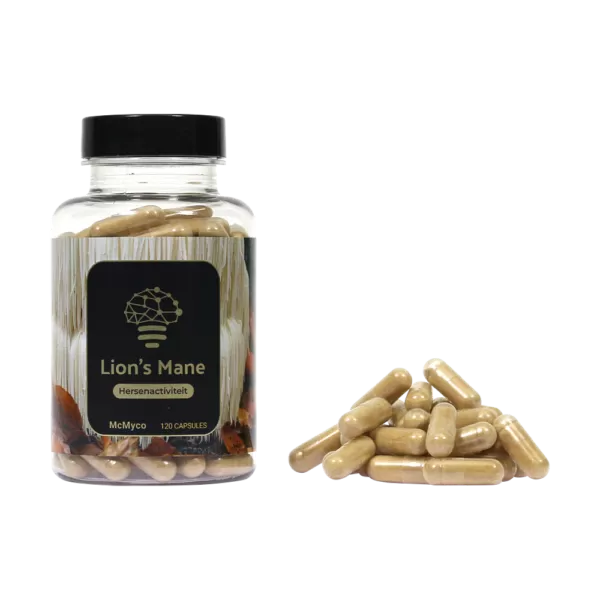 Click here to view our Lion’s Mane extract capsules
Lion’s Mane mushrooms are one of the most popular medicinal mushrooms on Earth. They are also known in the scientific world as Hericium erinaceus and are found in North America, Europe, and Asia. The mushroom has a long history of use in traditional Chinese medicine, where it was used to treat stomach ailments and nervous system issues.
Lion's Mane is an edible mushroom that grows wild all over the world, but especially in North America, Russia, and China. It has been used for centuries by people from many different cultures to help them find relief from their ailments. There are two types of Lion’s Mane: one that grows on tree trunks (hemlock) and the other that attaches itself to trees such as elm or maple (oak). Both types have long been part of traditional Chinese medicine.
In recent years, modern science has validated the claims regarding the medicinal properties of Lion’s Mane, although further research is needed to confirm and validate the many claims. To date, it has been demonstrated that the mushroom possesses neuroprotective and nootropic qualities and is capable of improving cognition in certain areas for patients with Alzheimer’s disease. One study even showed a 300% improvement in mild cognitive impairment. Again: many of these studies are preliminary, and the effects of Lion’s Mane are still awaiting approval from the European Commission.
Lion’s Mane is also rich in antioxidants, which are essential for combating inflammation and oxidative stress in the human body. This addresses issues such as autoimmune diseases, heart disease, and diabetes. As mentioned above, more and more research is also being conducted on the Lion’s Mane mushroom and the fight against Alzheimer’s.
Turkey Tail
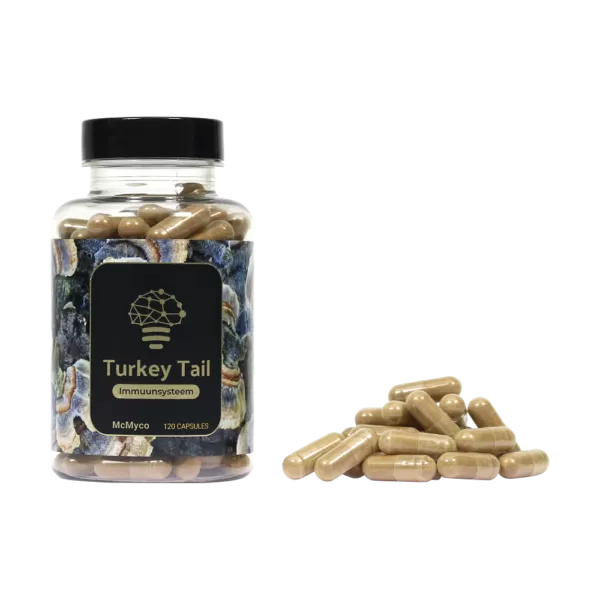 Click here to view our Turkey Tail extract capsules
Turkey Tail is a so-called polypore, meaning it is a mushroom with a large fruiting body that has pores on the underside through which spores are released. It has an indistinct stripe and, like many other mushrooms, is saprotrophic, meaning it breaks down decaying material. Turkey Tail is also known as Trametes Versicolor, the last word of which literally means “many colors.” One look at this unique mushroom proves exactly why they came up with that name!
Lion’s Mane, Turkey Tail, and other types of medicinal mushrooms are a source of mental clarity for many people with mental health issues. Just like the Lion’s Mane mentioned above, the Turkey Tail mushroom is also packed with antioxidants. It seems that a large part of human illness stems from the stress that affects our insides. Antioxidants help alleviate physical stress and combat unstable molecules (which can be carcinogenic). For this reason alone, Turkey Tail is a great product to add to your daily diet.
The reason Turkey Tail is one of the most remarkable mushrooms with medicinal properties is because it contains polysaccharopeptide krestin (PSK) and polysaccharide peptide (PSP). These substances are used in medical extracts to stimulate the immune system. PSP stimulates the growth of monocytes, which are white blood cells that fight infections. PSK, in turn, activates white blood cells that protect against harmful bacteria.
Reishi
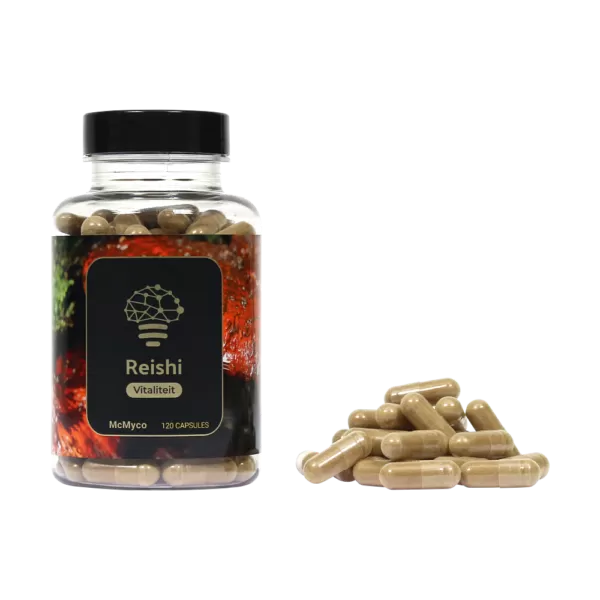 Click here to view our Reishi extract capsules
Reishi, also known as Lingzhi, Ganoderma lingzhi, or the reishi mushroom, is the third medicinal mushroom on our list. The lingzhi mushroom has been used for many years in traditional Chinese medicine, and although there is currently insufficient evidence to demonstrate that consuming it has effects on human health, many users swear by it. In nature, it grows at the base and stumps of deciduous trees, especially maple trees. Only two or three out of every 10,000 such old trees will have lingzhi growth, which is why the wild variety is rare.
The Reishi mushroom is also known as the mushroom of immortality. This name dates all the way back to the Han Dynasty, where the reishi mushroom is described in a poem as an integral part of qi—also known as life force. Although reishi has been used in traditional medicine just as long as other herbs, there is a significant lack of scientific studies on the reishi mushroom, partly because it is so rare.
If you’re wondering why millions of people worldwide have added the reishi mushroom to their diet, we can definitely answer that. Among the intended beneficial effects of this mushroom are promoting a healthy sleep cycle and stimulating the body’s ability to adapt to stress. In addition, the mushroom may help promote mental clarity. On top of that, this colorful mushroom is also packed with minerals, vitamins, amino acids, and dietary fiber.
Chaga
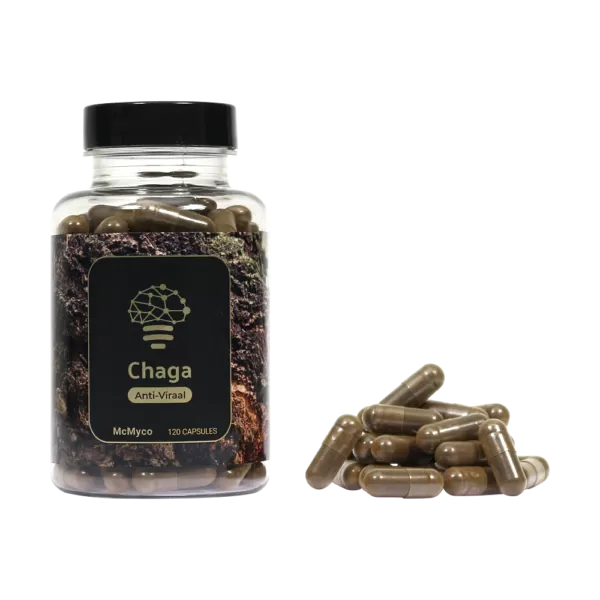 Click here to view our Chaga extract capsules
We’ve already explained above what saprotrophic means in the context of fungi, namely the breakdown of decaying material. The Chaga mushroom, however, is a parasitic mushroom, which means it breaks down other material when it comes into contact with it. Unlike the mushrooms mentioned above, Chaga doesn’t necessarily look like a typical mushroom. What we see as a Chaga mushroom is actually its mycelium, which resembles a strange, sticky mass or a protrusion from the tree. Because it contains such large amounts of melanin (the substance that gives us our brown color), we know that it provides pigment in numerous living organisms.
Chaga (Inonotus Obliquus), also known as the "diamond of the forest," is, like the mushrooms mentioned above, a "healing" species. It can help support the body against viruses, is a very powerful antioxidant, and extensive research has been conducted on Chaga’s effects against certain forms of cancer. Chaga is often used to balance the immune system, partly due to the compounds betulinic acids, ergosterol, fecosterol, and epsterol. It also contains a rich array of vitamins and minerals.
Also found in Chaga mushrooms are compounds called triterpenes, which cause cells to literally destroy themselves. You can imagine that this is something we’d love to see when fighting various diseases. This is why research is being conducted into the healing powers of these compounds.
Cordyceps
 Click here to view our Cordyceps extract capsules
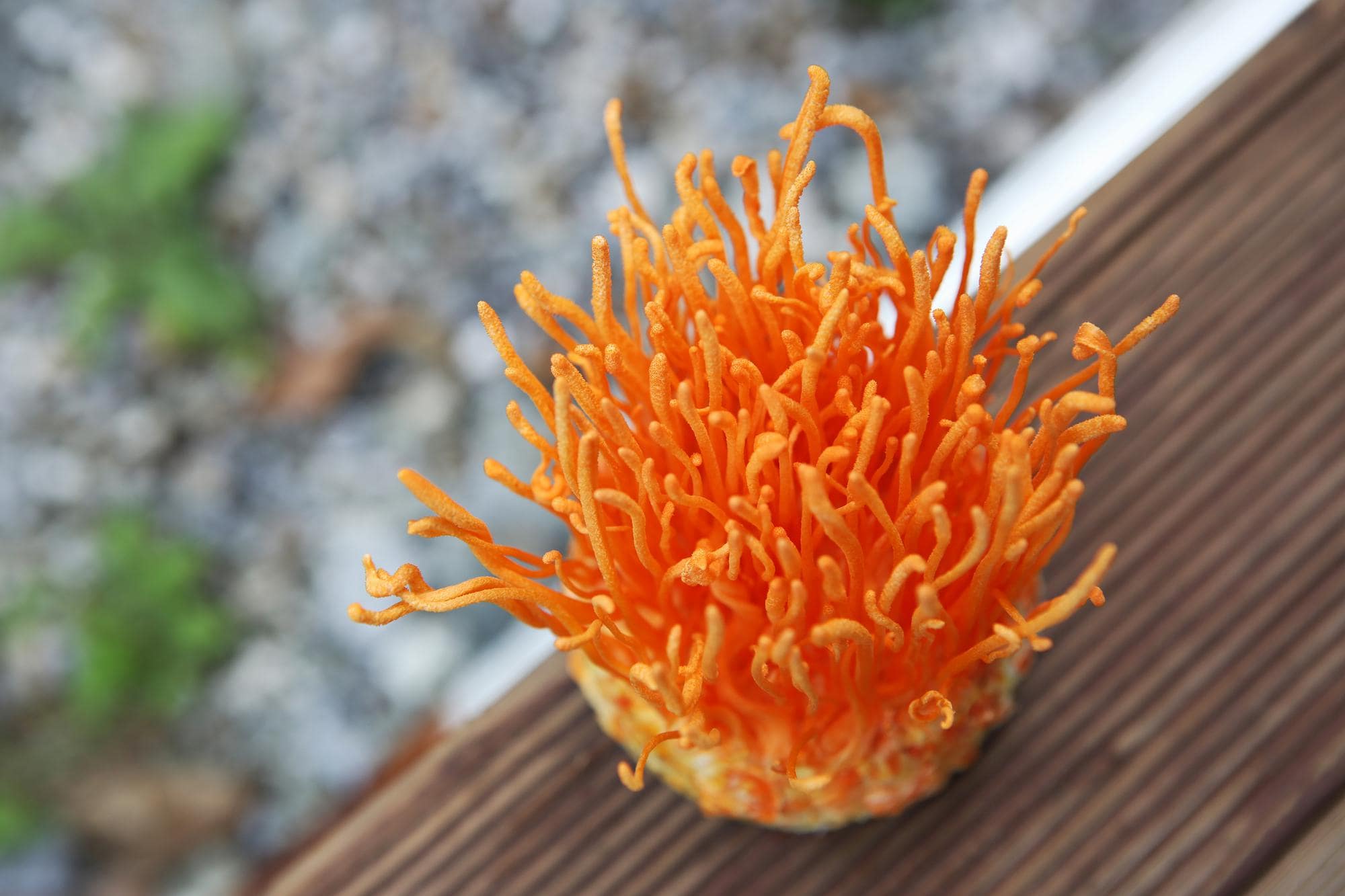
The last medicinal mushroom on our list is Cordyceps, also known as Cordyceps Militaris or the “prince of physical energy.” The Cordyceps mushroom is entomopathogenic, meaning it parasitizes insects and arthropods. In that sense, it’s a rather “scary” mushroom: it attacks its host and then spreads its spores. When spores land on an insect, the spore germinates. Strands of mycelium penetrate the host’s body and replace all the internal tissue with mycelium. Eventually, the fruiting body literally pushes its way out of the host’s head.
Okay, enough horror! Because although this mushroom has pretty terrible effects on insects, it’s actually very beneficial for humans. Cordyceps, also known as the caterpillar fungus because of its shape, promotes endurance, oxygen uptake, and a healthy metabolism. Because oxygen uptake improves with Cordyceps use, its transport in the blood increases. If Cordyceps is taken over a longer period, it can counteract fatigue or even chronic fatigue.
In addition, this mushroom is a true powerhouse in the bedroom. By stimulating the production of certain hormones such as testosterone, Cordyceps can contribute to an increased libido. Athletes and others looking to boost their physical performance seem to benefit the most from using Cordyceps extract.
Enrich your body with these extraordinary fungi!
Millions of people swear that the medicinal mushrooms mentioned above help with various conditions, ailments, and diseases. These medicinal mushrooms are an excellent way to get your hands on some of nature’s most powerful healing agents. Because these mushrooms are so diverse in their effects, it’s important to research which mushroom best suits your needs before incorporating them into your daily routine.


