


Last updated: March 25, 2026
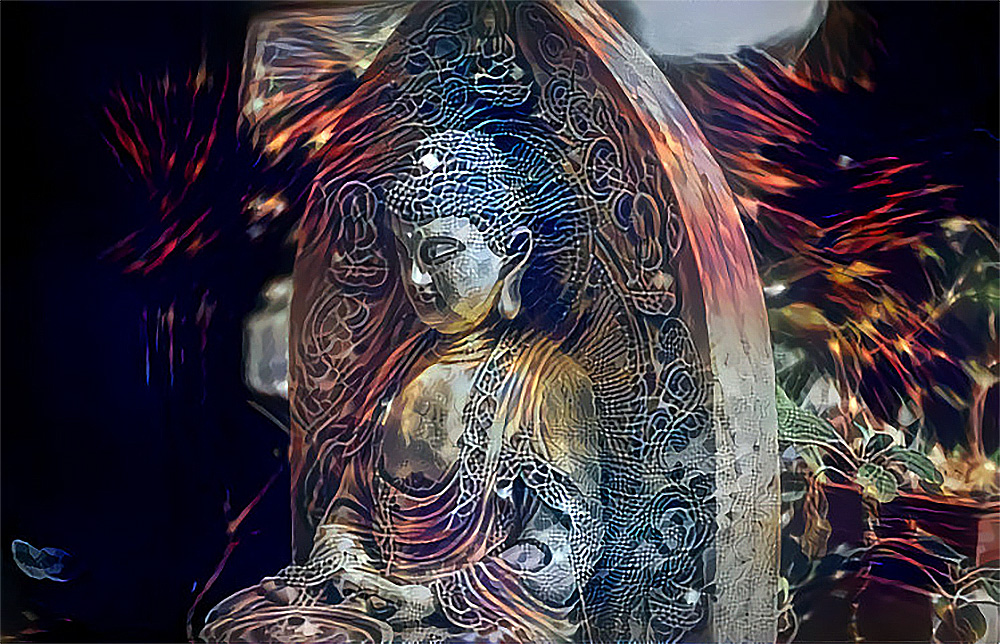
On April 8, some 2,500 years ago, one of the most influential figures in history was born in Lumbini (Nepal): Gautama Buddha. The philosopher, monk, meditator, spiritual teacher, and religious leader is revered worldwide as the founder of Buddhism, a religion centered on spirituality, enlightenment, and liberation of the mind.
Read also: Need to get your thoughts in order? A serving of truffles might help
A shared goal?
These are characteristics that are close to the hearts of many Dutch-Smarters. Many of our readers, in fact, use psychedelic substances such as magic mushrooms, truffles, LSA, mescaline, or ayahuasca on a fairly regular basis. The similarities are enormous. Both psychedelics and Buddhism seem, in many respects, to share the common goal of liberation of the mind. It is no coincidence that many of the great psychedelic thinkers of the 1960s eventually turned to Buddhism, such as Alan Watts, Aldous Huxley, and Jack Kerouac. Each of them was influenced in one way or another by their experiences with psychedelic substances.
The American Buddhist teacher Jack Kornfield, for example, said that LSD “prepares the mind for Buddhism,” while Alan Watts described both practices as part of a comprehensive philosophical quest. Buddhism has since become an integral part of the Dutch cultural landscape. The average Dutch person has a small Buddha statue in their bathroom or somewhere else in the house, or perhaps even a Buddhist artwork on the wall.
Ayahuasca and Buddhism
But to what extent can Buddhism be combined with the use of psychedelic substances? Spring Washam, an experienced Buddhist practitioner and teacher affiliated with the Spirit Rock Teachers Council, explored the combination of her Buddhist practice with the ceremonial use of ayahuasca, one of the most powerful psychedelic substances in the world. Her experiences sparked a wave of interest within Buddhist circles regarding the psychological and spiritual effects of psychedelics such as LSD, psilocybin, and DMT.
In an interview with Allan Badiner, author, activist, and editor of Zig Zag Zen: Buddhism and Psychedelics, it becomes clear how both philosophies are more relevant than ever. "Buddhism has a quality it shares with psychedelics, in the sense that it places great importance on the primacy of the mind and on being present in the moment," he told the Huffington Post. "The definition of psychedelic is mind-expanding or mind-manifesting, and both Buddhism and psychedelic substances have that in common."
It is precisely these substances that many people use as a kind of starting point toward Buddhism. Those who have had a psychedelic experience often describe a state that feels non-dual: the whole world felt meaningful and integrated, everything was alive. People then want to tap into that kind of experience of connectedness and joy in a more sustainable way, without dependence on a substance. And that path often leads to meditation and Buddhism.
Read also: Breakthrough: First psychedelic center opens in New York
'Spiritual accelerators'
Yet there are also dissenting voices. “There are people who insist that psychedelics have no place at all in Buddhism or the Dharma, while others believe the two are a wonderful combination,” says Badiner. “People take a position on that spectrum according to their own interpretation.”
Washam also admits that psychedelics are controversial in Buddhist circles, but he himself discovered that substances like ayahuasca act as “spiritual accelerators.” It was precisely the ayahuasca ceremonies that, as a kind of ultimate meditation, could enhance the practice of Buddhism and provide personal insights. Washam carefully screens participants for her retreats: about 20% are turned away due to contraindications from medication or because the experience is expected to be too intense. Through the lens of the Dharma, she believes ayahuasca can accelerate a kind of spiritual growth.
What does science say?
The question of whether psychedelics and meditation reinforce each other is now also being investigated in the scientific community. A randomized, placebo-controlled study at the University of Zurich showed that psilocybin combined with a mindfulness retreat deepened the practice of meditation, with increased mindfulness and improved psychosocial functioning that remained measurable after four months.1 Participants who received psilocybin reported significantly higher scores on unity of experience, bliss, and spiritual experience than the placebo group, while anxiety scores were lower.
A recent 2024 study, published in Psychopharmacology, examined the combination of DMT and harmine (an ayahuasca-inspired formulation) during a three-day meditation retreat with 40 experienced meditators. The combination led to significantly stronger mystical experiences, non-dual consciousness, and emotional breakthroughs compared to meditation with a placebo.2 A study on brain connectivity (published in Imaging Neuroscience, 2025) confirmed that DMT-harmine in combination with meditation brought about measurable changes in functional brain connections, indicating neurobiological synergy and not merely a subjective effect.3
In February 2025, the Psychedelic Buddhism Conference took place in New York, organized by Psychedelic Sangha, with over 600 participants from Theravada, Zen, and Vajrayana traditions. The discussion has shifted from whether psychedelics have a place in Dharma practice to how they can best be integrated. Robert Baker and Lama Mike Crowley demonstrated that references to mind-altering substances have appeared in tantric texts for centuries, including the Hevajra Tantra from the 8th–9th centuries.4
This research takes place in controlled settings. Psychedelics are powerful substances that are not without risks. Anyone interested in combining meditation and psychedelics would be wise to thoroughly inform themselves about dosage, set & setting, and any contraindications. More information can be found in the ayahuasca category and at kennisbank.dutch-smart.nl.
Sources
Smigielski, L. et al. (2024) — Psilocybin enhances insightfulness in meditation, Scientific Reports
Meling, D. et al. (2024) — Meditating on psychedelics: A randomized placebo-controlled study of DMT and harmine in a mindfulness retreat, Psychopharmacology
Meling, D. et al. (2025) — Meditation, psychedelics, and brain connectivity: A randomized controlled resting-state fMRI study, Imaging Neuroscience, MIT Press
Pistono, M. (2025) — Attitudes are shifting about Buddhism and Psychedelics, Lion's Roar
About the author

Editor
Derek writes for Dutch Smart about smart shop products, cultivation techniques, and harm reduction. He combines practical experience with factual, well-researched information, without hype or vague promises.


