



If there is one drink that has been shrouded in mystery since its very first use, it is absinthe. The drink, made from the herb Artemisia absinthium, was known as “the green fairy” and is linked to the so-called “destruction of the mind” of an entire generation of artists and writers, including Vincent van Gogh, Pablo Picasso, Arthur Rimbaud, Charles Baudelaire, Paul Gauguin, Henri de Toulouse-Lautrec, Oscar Wilde, and Aleister Crowley. Each and every one of them was an absinthe enthusiast, whose hallucinogenic effects caused all sorts of “depraved behavior.”
Devilish behavior
 Okay, let’s back up a bit… A drink that makes you act like a devil? Yes, people really believed that. The French writer Alexandre Dumas (1802–1870) even claimed that absinthe had killed more French soldiers in North Africa than Arab bullets. Oscar Wilde was also a fan of the psychedelic drink, and once wrote: “After the first glass, you see things as you would like them to be. After the second, you see things that do not exist. Eventually, you see things as they are, and that is the most terrible thing that can happen to you.” Legend also has it that Van Gogh was under the influence of absinthe when he cut off his ear to give it to the prostitute he had fallen in love with.
The height of “absinthe madness” was reached in 1905, when Jean Lanfray, a Swiss alcoholic, shot his wife and two of his daughters while drunk. The man claimed he did it because his wife had refused to clean his shoes. That day he had consumed large quantities of wine, cognac, and mint liqueur, but according to many authorities, the fault lay with the two glasses of absinthe he had also drunk. This was followed by a storm of anti-alcohol outrage that succeeded in banning absinthe in the United States and most of Europe. In the Netherlands, this happened in 1909, but the ban was lifted again in 2004.
Does absinthe really cause hallucinations?
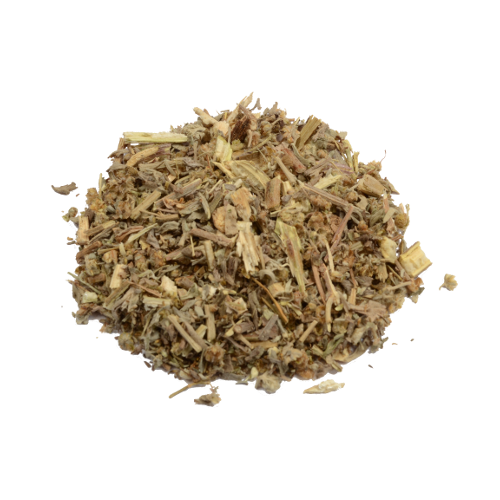
To answer this question, we must first look at how absinthe is made. The main ingredient of this unique drink is Artemisia absinthium. It is a plant belonging to the daisy family that has been attributed with various medicinal effects since ancient times. For example, it was used to remove intestinal parasites, but also as an aphrodisiac. Even before absinthe came along, wormwood was already a popular ingredient for flavoring alcoholic beverages: it imparts a refined bitter taste.
The active ingredient in wormwood is thujone. Its chemical structure resembles that of menthol and can be dangerous in high doses; it is true that it has a psychoactive effect, but not at the concentration of ten milligrams per liter found in most absinthes. Even regular sage or a jar of Vicks VapoRub contain the same levels of thujone, but no one has ever tried to ban a jar of Vicks in connection with deviant behavior…
So what’s the real story? Well, the fact is that most of absinthe’s effects can simply be attributed to its alcohol content—which, at 50 to 75 percent, is simply high. The concentrations of thujone needed to cause hallucinations are simply so enormous that they are virtually nonexistent in absinthe. In the late nineteenth and early twentieth centuries, however, absinthe was so popular that wine producers went to great lengths to prove that absinthe was dangerous—resulting in its ban.
Use wormwood safely
In high doses, the wormwood present is toxic. Frequent and prolonged use of wormwood can lead to addiction, as well as physical and mental decline. High doses can cause nervousness, restlessness, cramps, headaches, and dizziness.
Furthermore, the effects of absinthe should not be underestimated. Due to its alcohol content, absinthe is addictive both mentally and physically. Long-term use can cause nerve and brain damage. Here, too, alcohol is the culprit. Long-term use can also lead to physical and mental decline. With prolonged chronic use, absinthe can cause brain damage, psychosis, hallucinations, and intellectual decline, again due to its high alcohol content.


