



Last updated: March 25, 2026
Do you want to use ecstasy, but want to be sure that the pills you have aren’t contaminated? Then testing your drugs isn’t a luxury. In the Netherlands, you can have your pills professionally analyzed at a DIMS testing service (Trimbos Institute), but there are also handy drug tests you can use at home to get an initial indication.
Why test?
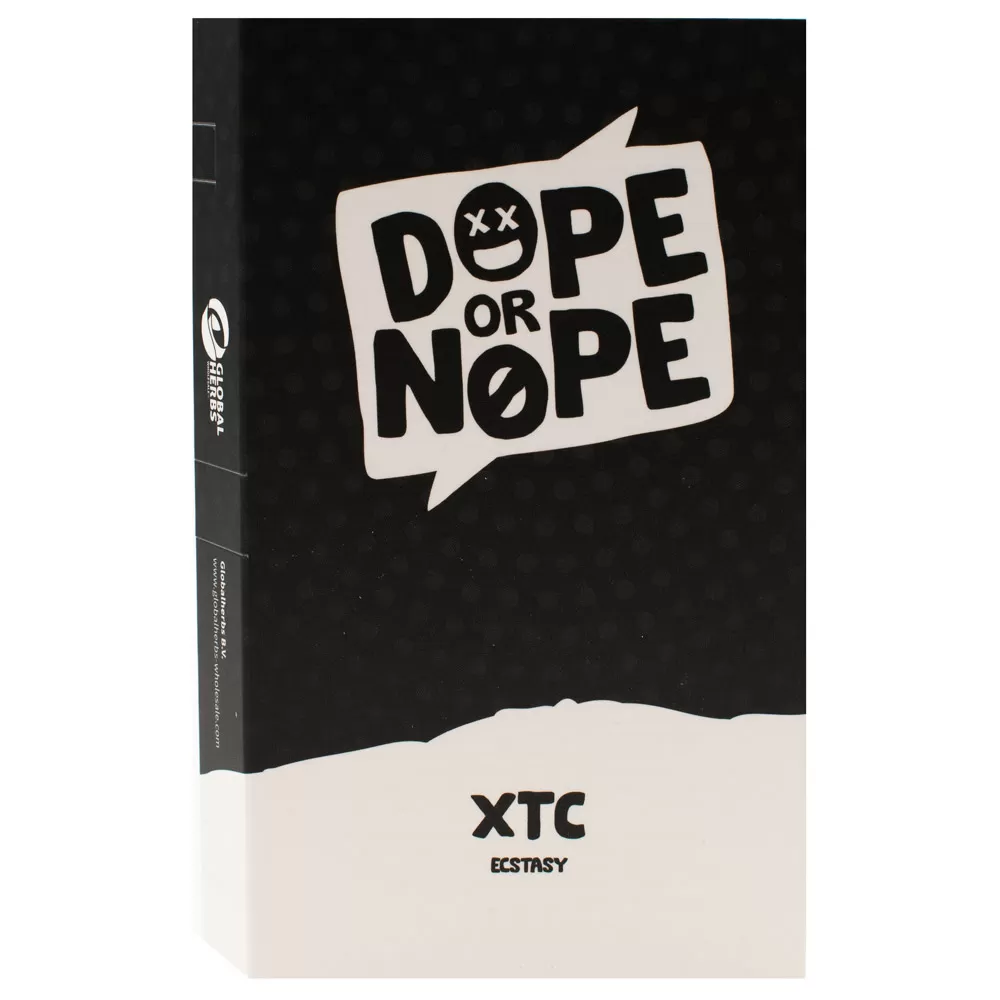 Contaminated drugs or pills with an unknown dose can be life-threatening. According to the Trimbos Institute, the vast majority of ecstasy pills tested in the Netherlands actually contain MDMA, but that means there are still pills in circulation that contain something else, or MDMA combined with unwanted additives. There is no quality control in illegal production, and the dose per pill varies enormously.
A common misconception is that pills with the same logo or color also have the same composition. A single logo-color combination can sometimes have dozens of variants with different compositions and dosages. A positive experience with a particular pill says nothing about an identical-looking pill from a different batch. Visually assessing or licking it is pointless.
How does an ecstasy test work?
Most at-home ecstasy tests, including the Dope or Nope ecstasy test, use a Marquis reagent. This is an acid solution first described in 1896 by the Russian pharmacologist Eduard Marquis. To this day, it remains the most widely used reagent test for identifying MDMA and related substances.
Here’s how it works: you scrape off a small piece of your pill and add a drop of the Marquis solution. The substance changes color, and that color indicates which group of substances is present:
- Dark purple to black (within 3 to 8 seconds): indicates MDMA, MDEA, or MDA
- Orange or brown: indicates amphetamine (speed)
- Green: indicates 2C-B or DOB
- No color change: none of the above substances detected; the contents are unknown
The Dope or Nope test comes with instructions, a vial of liquid, and a color chart. The test provides an indication of the substance group present, but does not identify the exact substance or measure the dosage.
The limitation: dosage
This is the most important caveat regarding a home test. The Marquis test can confirm that there is MDMA in your pill, but not how much. And it is precisely the dosage that poses a major risk. Ten years ago, the average MDMA content per pill was around 80 milligrams, an amount that produces the desired effect in most people. Today, the average pill contains more than double that amount, with some reaching 300 mg or higher. At those dosages, the risks of overheating, dehydration, and serotonin syndrome increase significantly.
Do you want an indication of purity in addition to the presence of MDMA? Then Dutch-Smart also offers the Dope or Nope MDMA purity test, which provides a rough estimate of the percentage of MDMA in your sample. This does not replace a laboratory analysis, but it does provide additional information that a standard Marquis test does not offer.
Professional testing
For a full analysis, you can visit a DIMS testing site operated by the Trimbos Institute. These are available in most major cities and at many festivals. At DIMS, your pill is first visually identified in a database. If the pill isn’t recognized, it goes to the lab for a full analysis. You’ll lose the pill you sent in, but you’ll know exactly what’s in it and how much, including any unwanted additives.
The combination is most effective: use a Dope or Nope home test for a quick initial indication, and also have at least one pill from the same batch professionally tested at DIMS.
Harm reduction with XTC (18+)
- Always test. Never take a pill without knowing what’s in it.
- Start with half a pill. Even if the test is positive for MDMA, you don’t know the exact dose. Take half a pill first and wait at least 90 minutes.
- Drink water, but not too much. MDMA disrupts fluid balance. Drink small sips regularly (no more than 2 to 3 glasses per hour), and avoid alcohol.
- Take breaks from dancing. Overheating is one of the most serious risks associated with MDMA. Cool down regularly.
- Do not combine. Do not combine MDMA with other stimulants, alcohol, MAO inhibitors, or antidepressants (especially SSRIs).
- Frequency. Do not use MDMA more than once every 6 to 8 weeks. More frequent use increases the risk of neurotoxicity and long-term mood issues.
- After-party support. After using MDMA, serotonin levels may be temporarily lowered, causing a "crash" in the days that follow. In the after-party category, you’ll find products that can support recovery.
- Age restriction: For individuals 18 years of age and older only.
The full range of drug tests, from ecstasy and cocaine to ketamine and LSD, can be found in the drug testing category and on the Dope or Nope brand page. Questions? Email support@dutch-smart.nl.
About the author

Editor
Derek writes for Dutch Smart about smart shop products, cultivation techniques, and harm reduction. He combines practical experience with factual, well-researched information, without hype or vague promises.


