

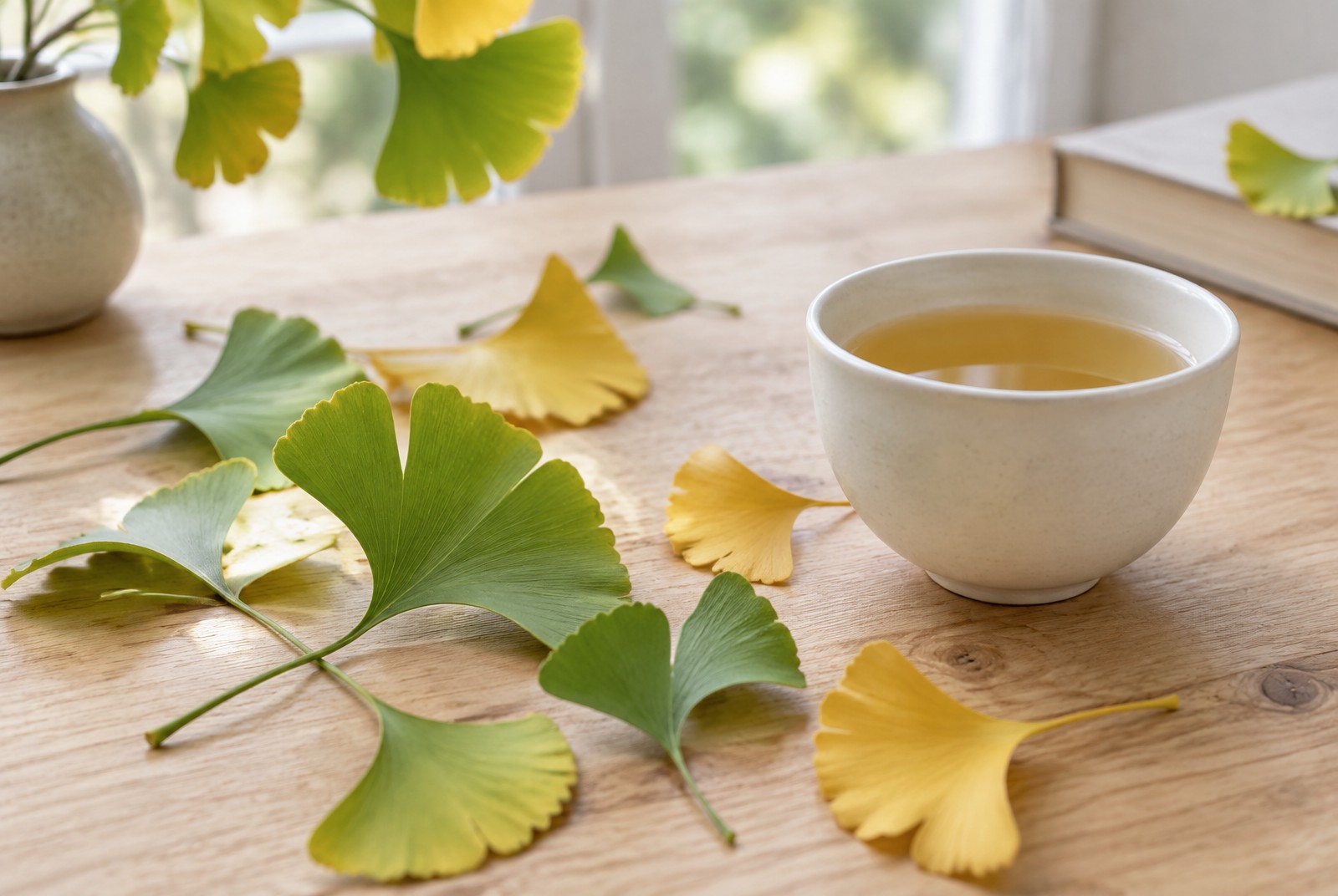
Ginkgo biloba is one of those ingredients you recognise before you know what it actually does. It’s on memory supplements at the pharmacy, in nootropics stacks online, and on the label of every “brain formula” you come across. But at Dutch-Smart we also sell the dried leaf itself. And a tincture. And a concentrated extract. Three forms of the same tree, and they don’t all do the same thing.
So the real question isn’t “does ginkgo work” but which form fits what you’re after?
A tree that’s 240 million years old
Ginkgo biloba is the sole surviving species of a plant family older than most dinosaurs. The tree originates from China, where the leaf has been used in traditional herbal medicine for centuries. In Europe you’ll find it as an ornamental and street tree, easy to spot by its fan-shaped leaves that turn bright yellow in autumn.
The medicinal use is all about the leaf. Not the fruit (which stinks), not the bark, the leaf. It contains two groups of compounds that researchers find interesting: flavonoid glycosides and terpene lactones. You don’t need to remember those names. What matters is that these compounds affect blood circulation.
Three forms in the shop
We stock ginkgo in three forms, and the difference between them is bigger than you’d think.
Ginkgo biloba 50 grams is the dried, loose leaf. You brew tea with it. The taste is mildly bitter, slightly grassy, with a hint of nut. You drink it like any herbal tea, calmly, as part of your morning or evening. The concentration of active compounds is low compared to an extract, but that’s the point: it’s tea, not a pill.
Japanese Ginkgo 1:1 extract is a liquid extract. The 1:1 ratio means 1 gram of extract corresponds to 1 gram of dried leaf. You take it in drops, neat or in water. Convenient if you don’t feel like brewing tea but still want the compounds from the leaf.
And then there’s the Japanese Ginkgo 10:1 extract. Here, ten times as much leaf has been concentrated into the same amount of powder. This is by far the strongest form we sell.
Brewing ginkgo tea
Use 2 to 3 teaspoons of dried ginkgo leaf per large cup. Pour hot water over it, just below boiling, and steep for 5 to 7 minutes. Longer is fine, but it gets more bitter. Less than 5 minutes and you won’t extract enough from the leaf.
Can you add honey? Yes! Milk? You can, but it tastes better without. We usually drink it straight here, in the morning.
Don’t expect miracles from a cup of tea though. One study found that a tea bag steeped for 5 to 7 minutes yields comparable amounts of active compounds to one capsule of standardised extract. But other sources dispute that and argue the the concentration in tea is too low for a real therapeutic effect. If you’re taking ginkgo for a specific purpose, an extract is simply the better choice. Tea is there for the taste and the ritual.
What does the science actually say?
The European Medicines Agency published a monograph on ginkgo leaf in 2015. The short version: standardised ginkgo extract is recognised for relieving symptoms of mild cognitive decline in older adults. That’s a cautious statement, and rightly so. It’s about mild complaints in older people, not about boosting memory in healthy twenty-somethings cramming for exams.
For circulation problems in hands and feet, the EMA gives the leaf the status of “traditional use”. Long tradition, but the clinical evidence isn’t strong enough for full recognition.
And for tinnitus or dizziness? Not recognised. Full stop.
Honestly, we think you should know this before you buy anything. Ginkgo is not a miracle cure. But it’s not nonsense either! It’s an herb with a long history and a limited but real area of effect.
1:1 or 10:1, what does it mean?
The extract ratio tells you how much plant material has gone into 1 gram of extract. With 1:1, it’s one to one. With 10:1, ten times as much leaf has been concentrated down to the same amount of powder.
Want to try ginkgo? Start with tea or the 1:1 extract. Notice a benefit and want something stronger? The 10:1 is the logical next step. Don’t jump straight to the most potent form if you don’t know how your body responds.
When you’re better off skipping ginkgo
This is the part most supplement shops leave out.
Are you on blood thinners, warfarin, clopidogrel, or even a daily aspirin? Talk to your doctor or pharmacist first. A 2025 analysis of patient data confirms that ginkgo can amplify the effect of blood thinners, increasing bleeding risk. This is not a theoretical concern.
Pregnant or breastfeeding? Don’t use it. Safety hasn’t been established. Children under 12 only under medical supervision.
Got surgery planned? Stop at least two weeks beforehand. Your surgeon will probably ask, but better to think of it yourself.
Side effects that are somtimes reported: headaches, stomach issues, dizziness. Usually at higher doses. Most users notice nothing, but listen to your body and start gently.