

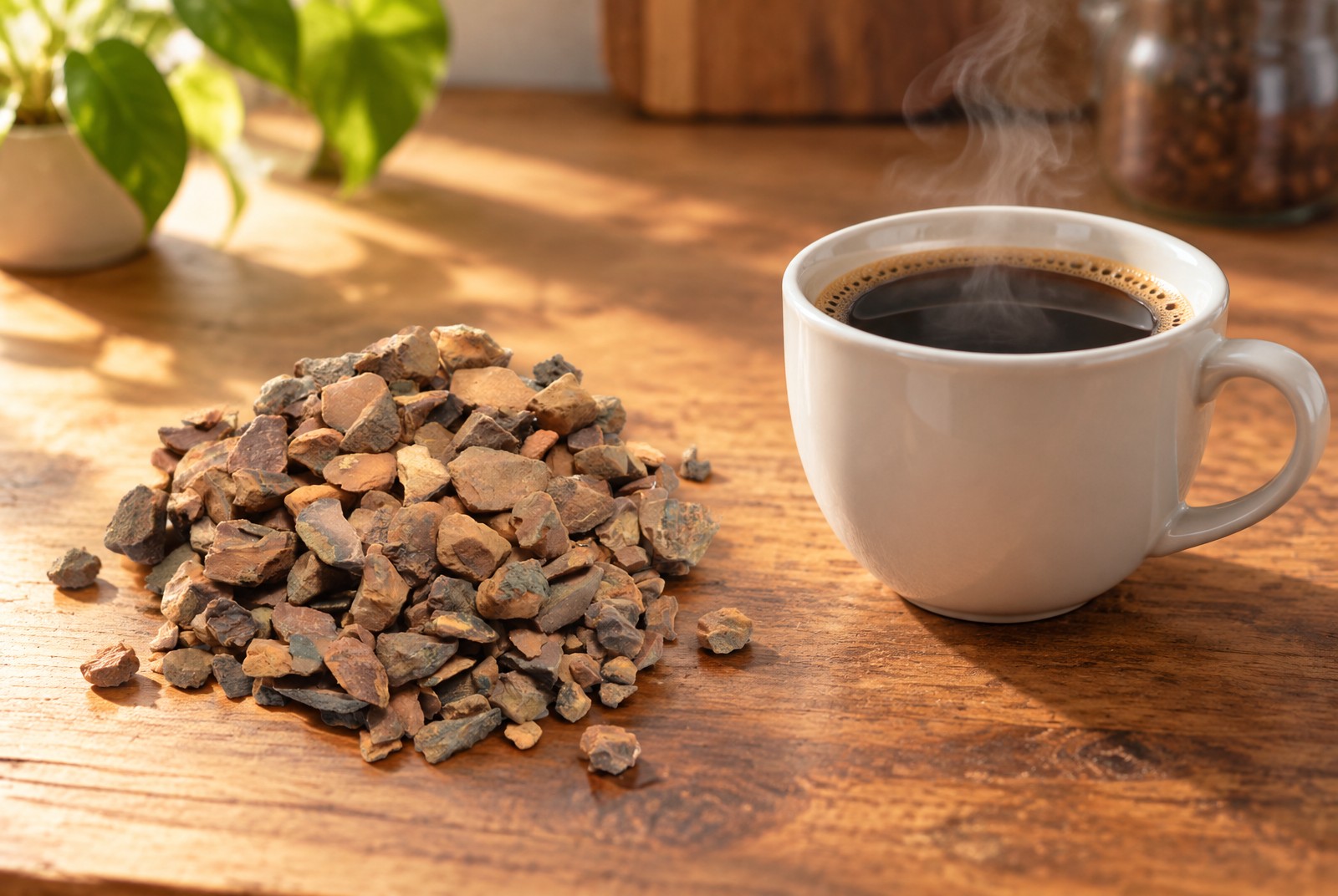
Kola nut. You know the word, because it’s hiding in the name of the world’s most famous soft drink. But have you ever actually held one? We’ve been selling kola nut for years, as powder and as whole nuts, and what we notice is that customers who try it tend to stick with it. There’s something in there that coffee doesn’t have.
Two compounds in one nut
Coffee contains caffeine, everyone knows that. Kola nut does too, about 2 to 3 percent, roughly the same as a coffee bean. But on top of that, it contains theobromine. The same compound found in cocoa, the one that gives chocolate its warm, gentle feel.
Caffeine hits fast. You feel it within twenty minutes and a few hours later it drops off. Theobromine is different, softer, slower, and it sticks around longer. The combination of both in one nut gives a more even kind of energy. Less spike, less crash. We notice it ourselves when we stir a teaspoon of kola nut powder into our morning coffee instead of brewing another cup.
Powder or whole nuts
The powder is the easiest option. Scoop a teaspoon (about 2 to 3 grams) into your coffee, tea, or hot chocolate. It tastes slightly bitter, a bit like unsweetened cocoa with a sharper edge. Start with one teaspoon and see how you respond.
Whole nuts are a different experience. You break off a piece and chew on it, the same way people in West Africa have done for centuries. The flavour is more intense and earthy, and the effect feels a bit more direct. Does it taste good? Honestly, it’s an acquired taste. But we think it’s worth trying at least once.
The nut that gave Coca-Cola its name
In West Africa, the kola nut is far more than a stimulant. In Nigeria and Sierra Leone, kola nuts are shared during greetings, negotiations, and ceremonies. Offering one is a sign of hospitality. The nut was so valued that in some regions it served as currency for centuries.
In 1886, pharmacist John Pemberton in Georgia mixed kola nut extract with coca leaf into a drink. It became Coca-Cola. The “cola” in the name comes directly from the nut! Whether the current recipe still contains actual kola nut extract is unclear, but the name stuck.
Kola nut vs guarana
We get asked this often enough to adress it here. Both are natural caffeine sources, both sit in our energy category. But guarana contains more caffeine per gram (up to 5 percent) and almost no theobromine. Its effect resembles coffee more closely, sharper and shorter.
Kola nut comes on gentler. The theobromine takes the edge off the caffeine, similar to how coffee feels when you drink it alongside hot chocolate. For more on guarana, check out guarana vs coffee and guarana powder or extract.
How much to take
Start with 2 grams of powder or a smal piece of whole nut. For most people that’s enough to notice the difference. Two teaspoons (5 to 6 grams) is the most we recommend, and honestly most customers don’t even go that far.
Already drinking a lot of coffee? The caffeine from kola nut adds up on top of that. Keep it in mind. And don’t use it too late in the day. Theobromine stays active longer than caffeine, which is nice during the day but less so at bedtime.