


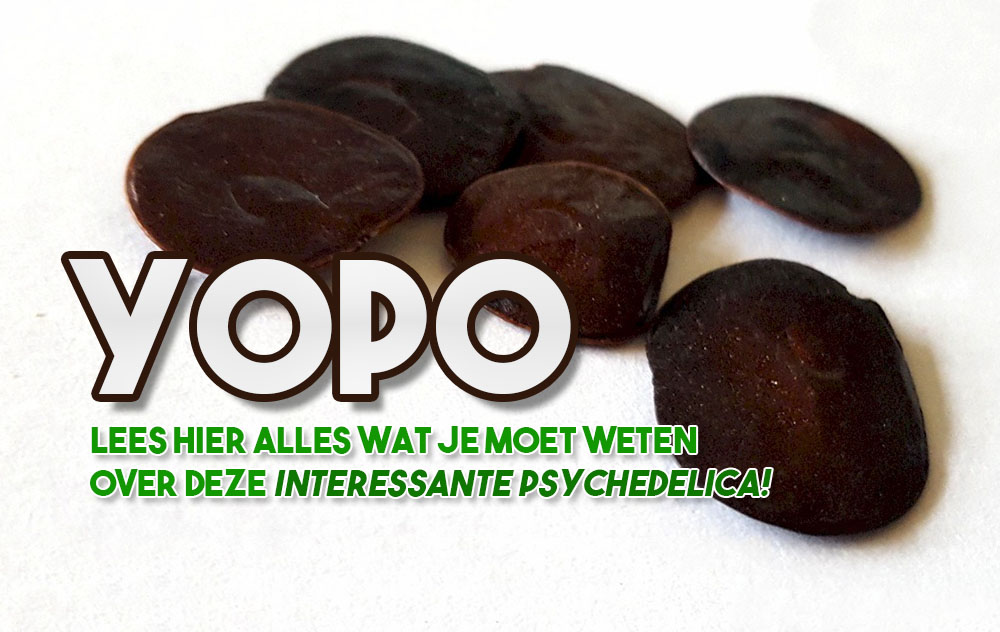
Are you looking for an intense trip full of visual effects? Then your search will undoubtedly lead you to yopo. Yopo is a mind-expanding substance that has been used by various tribes in South America for over 4,000 years. Today, it is primarily used by a few tribes in the Amazon jungle. It contains a combination of DMT, bufotenin, and 5-MeO-DMT—psychoactive compounds that produce a psychedelic trip full of visionary experiences, which many consider amazing.
Anadenanthera Peregrina
Sounds good! But what exactly is yopo? The scientific name for yopo is Anadenanthera Peregrina, but try pronouncing that... So, Yopo it is! The original name refers to the Sanskrit word “Ananda,” which means bliss. After drying and preparation, the seeds of this plant are highly psychoactive, making it a perfect substance for shamans and those seeking a visual journey.
Yopo is used extensively, particularly in Central America. Some indigenous peoples of the Orinoco plains, as well as those from Colombia, Venezuela, and possibly the southern part of the Brazilian Amazon, use yopo snuff for spiritual healing. Yopo was also widely used in ceremonial contexts in the Caribbean, including Puerto Rico and Hispaniola.
The effects of yopo
If you’re looking for an intense trip full of visual effects, then yopo is what you’re looking for. Users report intense visions about life, as well as a shift in perception. It gives you the opportunity to enter a true dream world. Perfect for the true psychonauts among us.
Many people compare yopo to ayahuasca, and there are good reasons for that. One is that ayahuasca, like yopo, contains DMT. Secondly, because yopo is usually taken together with Banisteriopsis caapi, one of the two plants used to prepare the ayahuasca brew. Although yopo can have a powerful effect on its own, the effects are enhanced when combined with Banisteriopsis caapi.
Yopo seeds contain many active ingredients, including bufotenin, 5-MEO-DMT, 2,9-dimethyltryptoline, and DMT-n-oxide. Banisteriopsis caapi, in turn, contains MAOIs (monoamine oxidase inhibitors), a chemical compound produced by our own bodies to break down substances like DMT. This ensures that the DMT from the yopo seeds remains in the system much longer.
Yopo shamans describe the experience as an opening of the third eye, allowing for the perception of non-physical spiritual dimensions.
How is yopo used?
As mentioned earlier, yopo seeds have been used in various ways for over 4,000 years. The oldest clear evidence of yopo use shows that in ancient times, smoking pipes made from yopo were used. In Argentina, bones containing the hallucinogen DMT—one of the compounds found in Anadenanthera beans—were discovered. Lab tests revealed that the material dated back to 2,130 BC, suggesting that the substance has been used for over 4,000 years.
The leathery, dark brown seed pods grow to over 35 cm in length and contain a reddish-brown yopo seed 1–2 cm wide. The dried yopo seeds are lightly roasted and then ground into a fine powder that is mixed with an alkalizing powdered coating and ground plantain leaves. In some cases, tobacco, honey, and other ingredients are also added to give the substance a more pleasant scent.
Inhaling Yopo
The best effect is achieved when yopo is blown into the user’s nostrils by a second person using a straw or thin tube. (Or bamboo or bird bone tubes if you want the authentic experience.) Blowing is more effective than snorting because this method allows more powder to enter the nose and is reportedly less irritating. Once you’ve taken a “hit,” the effects are usually noticeable within ten minutes. After about half an hour, you reach a peak, but the effects are still noticeable up to two to three hours after ingestion.
In some areas, the unprocessed ground beans are smoked, resulting in a much weaker effect and stronger physical symptoms.
Oral use
Some tribes in South America consume yopo orally in small amounts, often combined with an alcoholic beverage. In smaller doses, its use is described as unpleasant. Nausea and vomiting are common. In fact, the beans were a main ingredient in bilca tauri, an oral purifying agent used once a month during a ritual vomiting session. Large quantities are usually not consumed orally, as many tribes believe this to be dangerous.
Instructions for using yopo seeds
The Yopo seeds we sell on Dutch-Smart can be used to grow a plant yourself, but of course they can also be prepared to experience a trip. We’re happy to explain how to do that:
- Heat the seeds over low heat until they burst open
- Remove the inner part and discard the shell
- Then heat the inner part over low heat; stop when the seeds become hard and grainy
- Grind the seeds
- Then mix two parts seeds with one part calcium hydroxide and one part baking soda
- Add a few drops of water so you can form a dough
- Mix well, then heat the mixture until everything has dried out. After that, grind everything again until you have a fine powder
Tip: Use a pan with a lid, because when the seeds burst open, they can fly out.
The result of the steps above is a nice homemade, snortable mixture. For the best effect, it’s helpful to have a second person blow the mixture into your nose using a straw or small tube, as explained above. Okay, but how many seeds should you use? If you’re just starting out, start with the amount of powder from one seed. You’ll get a mild to moderate effect with two seeds, and with three to five seeds, you’ll reach the full experience.
In short: using yopo is a great way to experience a visual trip. Fans of psychedelic journeys swear by it, and you might soon join the ranks of its many fans. Want to try yopo? You can get yopo seeds delivered to your door for just €5.95! If you have any further questions about using this product, please contact us.


