

Last updated: March 25, 2026
LSA and LSD are often confused with one another, and that’s not surprising. The names are similar, and the molecular structures share a common core: the ergoline ring system. But if you look a little closer, you’ll find significant differences in origin, effects, potency, and side effects. In this article, we’ll compare the two.
What is LSA?
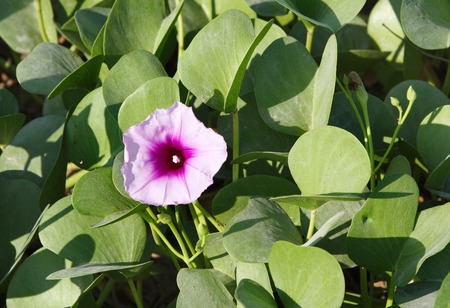
LSA stands for lysergic acid amide, also known as ergine. It is a naturally occurring ergoline alkaloid found in the seeds of plants from the Convolvulaceae family. The two best-known sources are Hawaiian Baby Woodrose (Argyreia nervosa) and Morning Glory (Ipomoea tricolor). In Mexico, Morning Glory seeds had been used ritually for centuries by the Aztecs and Mazatecs, who called them ololiuhqui. Albert Hofmann, the same chemist who discovered LSD, identified LSA in 1960 as the active ingredient in these seeds. He was surprised: it was the first time a substance from the lysergamide family had been found in higher plants, whereas until then it was thought that these compounds were produced exclusively by fungi.1
The amount of LSA per seed is not constant. This makes it difficult to take a precise dose when chewing the seeds or preparing an extract. In addition to LSA, the seeds also contain other ergoline alkaloids such as lysergic acid hydroxyethylamide (LSH), isoergine, and ergonovine, plus non-alkaloid components believed to be responsible for some of the side effects (particularly nausea and vasoconstriction).
What is LSD?
LSD (lysergic acid diethylamide) is a semi-synthetic substance synthesized in 1938 by Albert Hofmann at Sandoz Laboratories in Basel. The raw material is lysergic acid, which is extracted from the ergot fungus Claviceps purpurea, a fungus that grows on grain, particularly rye. By chemically modifying lysergic acid with two ethyl groups at the amide position, LSD is created, a molecule that is many times more potent than LSA.
LSD is one of the most potent known psychedelics. While an average dose of dried LSA-containing seeds ranges from tens to hundreds of milligrams, LSD is effective in the microgram range: a standard dose is 50 to 200 micrograms. This difference in potency is no coincidence, but is related to receptor affinity (see below).
Pharmacology: why they work differently
LSA and LSD share the ergoline ring system and both bind to serotonin (5-HT), dopamine (DA), and adrenergic receptors. But that is where the similarity largely ends. In vitro binding studies show that LSA has a lower affinity than LSD for all tested receptor subtypes.2 At the serotonin5-HT2A receptor, which is considered the primary mediator of psychedelic effects, LSA is roughly ten times less potent. A human trial by the same research group (Kremer et al., 2012) confirmed this: subjects who ingested Argyreia nervosa seeds experienced no changes in visual perception or mood as reported with LSD. Instead, vegetative side effects dominated: hypertension, nausea, vomiting, tremor, and weakness. The study even had to be terminated prematurely due to the severity of the side effects. The researchers concluded that LSA should not be considered a pharmacologically LSD-like psychedelic.2
Hofmann himself described the difference as early as the 1960s. He called the effect of LSA “predominantly narcotic” (in the old sense of sleep-inducing), whereas LSD is a “highly specific hallucinogen.” This narcotic-sedative nature of LSA has since been repeatedly confirmed and makes it a qualitatively different experience from LSD.
A complicating factor is that LSA seeds do not contain only LSA. Lysergic acid hydroxyethylamide (LSH), which is also present in the seeds, may have a stronger psychedelic profile than LSA itself, but has been studied much less extensively. It is therefore conceivable that the psychoactive effects users attribute to LSA are partly due to other alkaloids in the seed mixture.
Comparing the effects
In practice, users do report psychedelic effects from LSA seeds, even though pharmacology shows that isolated LSA is weakly psychedelic. This difference likely stems from the fact that users do not ingest isolated LSA, but rather a complex mixture of alkaloids.
What consistently emerges in user reports and the scientific literature:
- LSD typically produces a clear, energetic experience with pronounced visual and auditory changes, altered sense of time, and emotional depth. The effects begin after 30 to 60 minutes and last 8 to 12 hours.
- LSA (via seeds) produces an experience that users describe as more introspective and sedative, often with a dreamy, “narcotic” quality. Visual effects occur but are generally more subtle than with LSD. The effects begin after 1 to 2 hours and last 4 to 8 hours, depending on the dose and the source (Hawaiian Baby Woodrose or Morning Glory).
The main difference lies not only in the psychedelic component but also in the physical side effects (see below).
Side Effects and Risks
This is where the two substances differ the most.
As an isolated, pure substance,LSD causes relatively few physical side effects. Nausea, dilated pupils, and slight fluctuations in body temperature may occur, but are generally mild. The psychological risks are greater: a bad trip can be intense and prolonged, and in individuals with a predisposition to psychotic disorders, LSD can trigger a psychosis. LSD is completely metabolized by the liver; once the effects have worn off, the substance is gone from the body. There are no documented fatal overdoses from pure LSD.
LSA seeds cause significantly more physical symptoms. The most commonly reported side effect is nausea, which is sometimes so severe that it overshadows the experience. This is not only due to LSA itself, but also to other compounds in the seeds, such as cyanogenic glycosides and vasoactive compounds. Vasoconstriction (narrowing of blood vessels) is another risk specific to LSA seeds and not to LSD: it can lead to cold extremities, cramps, and, in rare cases, more serious vascular symptoms. Using an extract instead of raw seeds may reduce stomach upset, but does not completely eliminate the risk of vasoconstriction.
The first systematic review of human data on LSA, published in 2025 in Pharmacy, confirms that scientific knowledge about the risks of LSA is limited and that online information about extraction and ingestion methods is often inaccurate or misleading.3 The review also notes that LSA showed a positive effect in some studies on cluster headaches, similar to comparable observations with LSD and psilocybin, but that this is, for now, no more than an indication.
Legality in the Netherlands
LSD is listed on Schedule I of the Dutch Opium Act. Possession, trafficking, and production are criminal offenses.
LSA-containing seeds are legally available in the Netherlands. The plant and the seeds are not listed in the Opium Act. Isolated LSA (ergine) is also not explicitly prohibited as a substance, although it is regulated in some European countries. The legal availability of the seeds makes LSA a more accessible alternative for many people, but that does not necessarily make it safer: as described above, the side effect profile of the seeds is actually more extensive than that of LSD.
Harm reduction (18+)
- Dosage: The potency per seed varies greatly. Start with a low dose: for Hawaiian Baby Woodrose, that’s 2 to 3 seeds; for Morning Glory, 50 to 100 seeds. Wait at least 2 hours before taking more, as the effects come on slowly.
- Reducing nausea: A cold water extract (seeds finely ground, soaked in cold water for 6 to 8 hours, then filtered) reduces stomach discomfort compared to chewing the seeds. Fresh ginger before ingestion can also help.
- Vasoconstriction: Be aware that cold fingers, toes, or cramps may occur. Avoid LSA if you have known vascular conditions or Raynaud’s disease.
- Avoid combinations: Do not combine LSA seeds with other psychoactive substances, alcohol, or vasoactive medication.
- Set and setting: Ensure a familiar environment and a sober companion, especially for a first-time experience.
- Contraindications: Do not use if pregnant, or if you have cardiovascular disease, mental health conditions, or a family history of psychosis.
- Age restriction: For individuals 18 years of age and older only.
Want to try LSA seeds? In the LSA seeds category at Dutch-Smart, you’ll find Hawaiian Baby Woodrose and Morning Glory seeds, including usage information for each product. More background information is available at kennisbank.dutch-smart.nl. Questions? Send an email to support@dutch-smart.nl.
Sources
Hofmann, A. (1963) — The active principles of the seeds of Rivea corymbosa and Ipomoea violacea, Botanical Museum Leaflets, Harvard University, 20(6): 194-212. See also: Ergine (Wikipedia)
Paulke, A. et al. (2013) — Argyreia nervosa: receptor profiling of lysergic acid amide and other potential psychedelic LSD-like compounds by computational and binding assay approaches, Journal of Ethnopharmacology
Moreira, J.M.A. et al. (2025) — Lysergic Acid Amide (LSA), an LSD Analog: Systematic Review of Pharmacological Effects, Adverse Outcomes, and Therapeutic Potentials, Pharmacy, 13(4): 98
About the author

Editor
Derek writes for Dutch Smart about smart shop products, cultivation techniques, and harm reduction. He combines practical experience with factual, evidence-based information, without hype or vague promises.


