


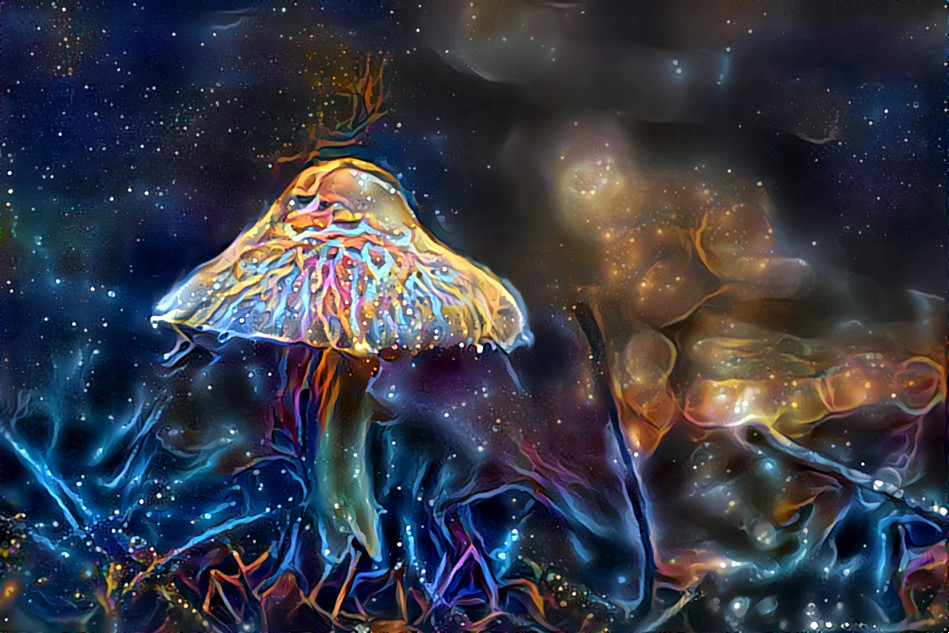
Our love for magic truffles and magic mushrooms knows no bounds. They’re life-changing, the effects are intense, and they also seem to have the potential to be used in the medical field. Okay, they aren’t exactly tasty to eat, but that’s about the only negative thing to say about them, right? New research now shows that psilocybin, the active ingredient in these mushrooms and truffles, can cause changes in the brain for up to a month after use.
Read also: Do Buddhism and psychedelics share the same spiritual goal?
Lasting impact
Anyone who’s ever taken a dose of shrooms knows that for 5–7 hours, it’s one wild trip. The world around you changes, you see yourself from a different perspective, and the trip seems to last forever. But what actually happens after such a trip? Previous studies have already shown that there may be a link between a mushroom trip and, for example, quitting smoking, but new research now indicates that changes are indeed still detectable in the brain.
Instead of studying the brain while it is under the influence of psilocybin, researchers at the Johns Hopkins University School of Medicine were primarily interested this time in the lasting impact of the substance. “Almost all studies on psychedelic imaging have been conducted during the acute effects of psychedelic drugs. While the acute effects of psychedelics on the brain are, of course, incredibly interesting, the lasting effects of psychedelics on brain function hold great untapped value in helping us better understand the brain, affect, and the treatment of psychiatric disorders,” says Frederick S. Barrett, assistant professor and author of the study.
For this study, 12 volunteers received a single high-dose administration of psilocybin. One day prior, one week after, and one month after the psilocybin administration, the volunteers completed three different tasks to assess the processing of emotional information (particularly facial expressions), while the researchers used magnetic resonance imaging to record their brain activity. During these three sessions, the volunteers also completed various questionnaires about their emotional functioning.
Read also: Lockdown Love: We’re Having Way More Sex During the Crisis
Less emotional distress
The researchers found that self-reported emotional distress had decreased one week after psilocybin administration, but had returned to baseline levels one month after administration. Barrett and his colleagues also observed a decrease in amygdala responses to emotional information one week after psilocybin administration, but these returned to normal by one month after psilocybin.
In addition, the researchers found increases in resting-state functional connectivity—which measures how blood oxygen level-dependent signals are coordinated across the brain—both one week and one month after psilocybin administration. In other words: brain function remains different from before for at least a month after using magic mushrooms or truffles.
“A single high dose of psilocybin, administered to well-screened individuals in a carefully controlled setting, can have lasting positive effects on emotional functioning in healthy individuals. These effects manifested as transient changes in the function of brain regions that support emotional processing,” Barrett told PsyPost, an English-language outlet focused on the psyche.
“This study needs to be replicated in a larger sample with appropriate experimental controls, and we need to determine whether psilocybin exerts the observed effects by acting directly on emotional brain circuits, or by acting on brain circuits that govern attention and cognition, which may have effects on brain circuits that regulate emotion,” Barrett explained.


