


Research into the therapeutic use of psilocybin-containing substances such as magic mushrooms and magic truffles is becoming increasingly popular. As a result, interest in psilocybin has shifted in recent years from hippie communities to prestigious scientists and institutions such as Johns Hopkins. Now, a Danish synthetic biology company, Octarine, has also begun working with psilocybin.
Read also: New research demonstrates promising effects of microdosing
Psilocybin or psilocin...
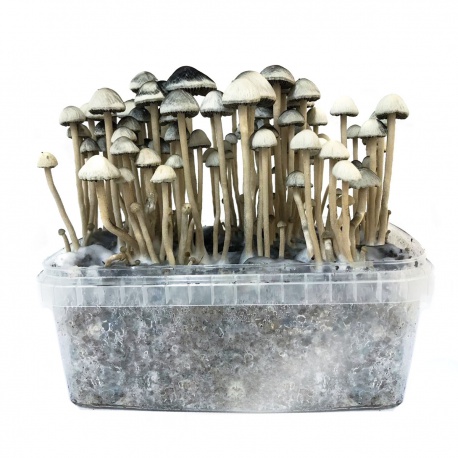 Avid Dutch-Smarters probably already know a lot about what psilocybin, the active ingredient in magic mushrooms and magic truffles, could do for you. Yet psilocybin itself is not actually psychoactive. Once psilocybin is ingested, it is converted in the body into psilocin, which ultimately causes the hallucinations. Alternative methods of ingesting psilocybin that bypass the digestive tract, for example, do not cause any hallucinations at all.
Psilocin, in turn, is particularly interesting because its structure is similar to serotonin, an important neurotransmitter in the brain. In addition, it can bind to many of the same receptors. When psilocin binds to these receptors, it causes many of the hallucinogenic effects associated with eating mushrooms. Generally speaking, when we discuss the effects of psilocybin, we’re actually referring to psilocin; however, since these substances are almost always ingested orally, they are considered “the same” for the reader’s convenience.
Read also: Seniors are also using cannabis in droves these days!
Beer or magic mushrooms?
The production of pure psilocybin isn’t entirely new. We previously discussed here on Dutch-Smart a company that transformed E. coli bacteria into this powerful psychedelic substance, but this method had a number of issues. For instance, an enzyme essential for the production of psilocybin molecules was not present in these bacteria, which ultimately made the process too expensive for large-scale production. This enzyme, 4-hydroxyindole, costs over 200 euros per gram.
But the Danish scientists at Octarine have a solution for that. They don’t use bacteria, but rather brewer’s yeast (Saccharomyces cerevisiae) to produce the potent substance. “The genetic material that Psilocybe cubensis uses to produce the psilocybin molecule has been optimized to be expressed in the brewer’s yeast and then inserted into the yeast’s genome,” Octarine co-founder and chief science officer Nick Milne told Technology Networks
Unlike E. coli, yeast is thus capable of expressing a key enzyme via the natural pathway that produces psilocybin in magic mushrooms. Simply put, this means that by using yeast, this group of Danish researchers has rendered the expensive chemical relied upon by other biotechnological methods obsolete. In their experiment, the yeast group’s final production yield was approximately 627 mg/L of psilocybin and 580 mg/L of psilocin. Although this is less than what E. coli produced, it is also cheaper.
Manipulating organisms
An amino acid called tryptophan is also a key component of the process, so the brewer’s yeast is additionally modified to produce more of it than usual. “This is actually a very important aspect of metabolic engineering,” says Milne. “These days, it’s usually relatively easy to engineer an organism to produce a foreign molecule, but the major challenge is getting the organism to produce enough of the molecule to be commercially viable.”
Although chemical synthesis is useful for making some compounds, others, such as the psilocybin molecule, have a complex chemistry that isn’t suited to the technique. This makes it difficult to synthesize the molecule cost-effectively. Brewer’s yeast, on the other hand, is closely related to some of these psilocybin-containing mushrooms and has a long history of commercial use. In short: the two together are a promising way to produce psilocybin on a large scale.
Read also: Here’s why hemp can be a great addition to your diet
We’re not quite there yet...
Still, they aren’t there yet, says Octarine itself. “A group of amino acids on the psilocybin molecule gets split off during the process. Essentially, we lose half of our product because the phosphate group (amino acid group) falls off,” said Milne. In other words, even more metabolic engineering is needed to solve the problem.


