What is kambo, exactly?
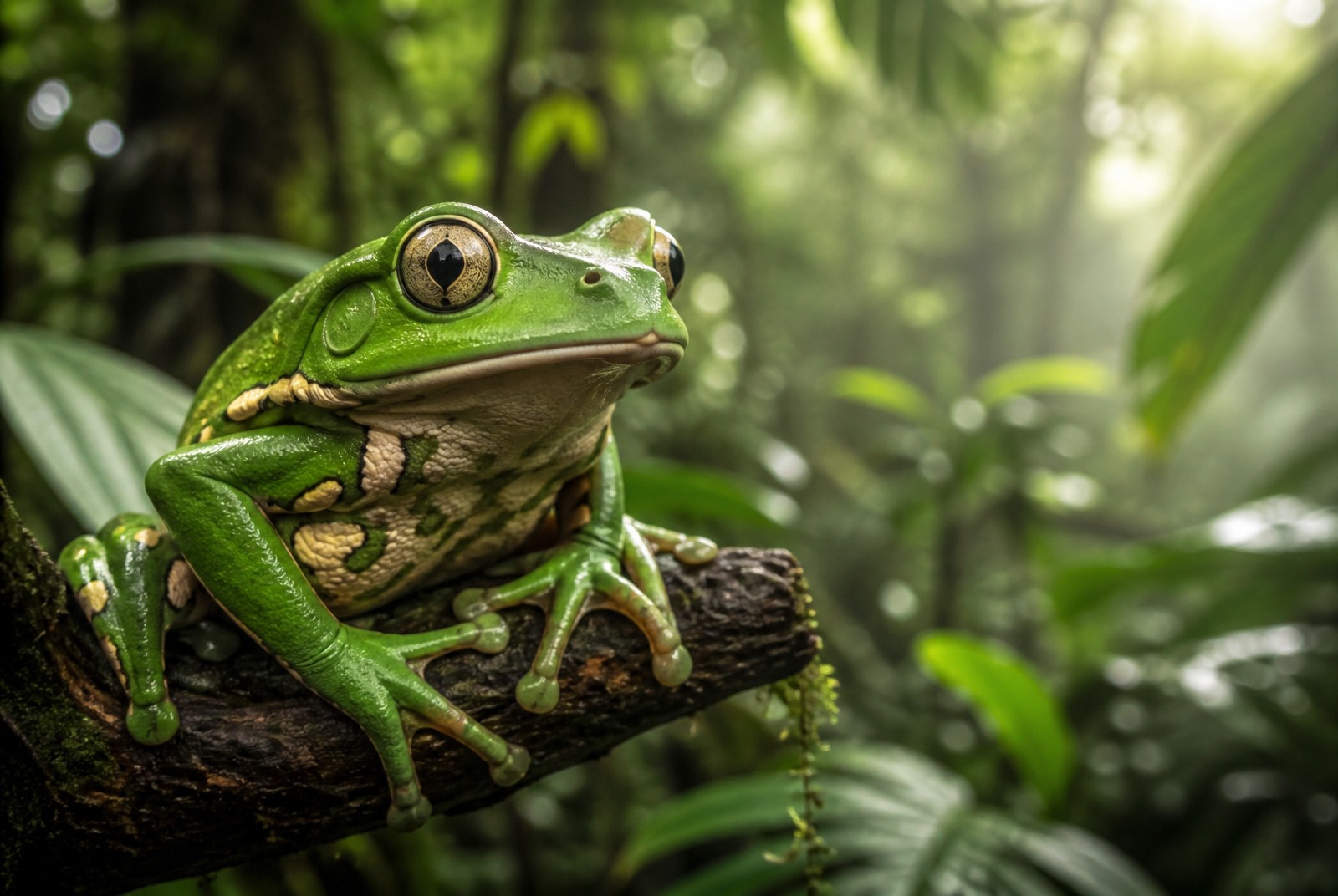
Kambo is the dried skin secretion of the Phyllomedusa bicolor, a large tree frog native to the Amazon rainforest. That secretion is packed with bioactive peptides: short protein chains that act directly on the human nervous system, digestive tract, and cardiovascular system. Indigenous peoples in Peru and Brazil have used it as a purification ritual for centuries.
In the Netherlands, kambo is legal and freely available. It is not listed under the Opium Act and does not fall under pharmaceutical regulations. That said, it is not something you order casually: a kambo session is physically intense, lasts about 30 to 40 minutes, and requires preparation. This article explains what happens during a session, which compounds are involved, and who should avoid kambo entirely.
The Matsés and the secret of the hunt
The best-documented users of kambo are the Matsés (also known as Mayoruna), a people living on the border of Peru and Brazil. Other groups that practise kambo include the Katukina, Kaxinawá (Huni Kuin), and Yawanawá. The exact age of the tradition is unknown, but estimates span several centuries.
The traditional purpose is remarkably practical: hunting preparation. Matsés hunters apply kambo the evening before a hunt. The purge is believed to rid the body of "panema," a concept that roughly translates to bad energy or lethargy. After a session, users consistently report sharper senses, greater endurance, and a clearer mind. Whether you attribute that to spiritual cleansing or to the pharmacological effect of nine peptides on the nervous system, the tradition is real and has been described across generations.
Nine peptides that turn your body inside out
Kambo secretion contains a cocktail of bioactive peptides. Six of them define the course of a session.
Dermorphin is a mu-opioid receptor agonist, 30 to 40 times more potent than morphine. It explains the brief numbing and analgesic effect that some users experience.
Deltorphin I and II act on delta-opioid receptors and contribute to the overall analgesic profile of the secretion.
Phyllocaerulein, related to the human hormone cholecystokinin, stimulates gastric secretion and smooth muscle contraction. This is the peptide that drives the purging.
Phyllomedusin is a tachykinin that dilates blood vessels and stimulates salivation. The facial swelling during a session is phyllomedusin at work.
Phyllokinin, a bradykinin-related peptide, lowers blood pressure.
Dermaseptins have antimicrobial properties and are active against bacteria, fungi, and certain protozoa. Research into dermaseptins as a basis for new antibiotics is ongoing at several universities.
None of these compounds are synthetic. They are evolutionary defence mechanisms of the frog that happen to interact profoundly with human physiology.
What a kambo session looks like
A kambo session follows a fixed sequence, whether it takes place in the Amazon or in a ceremonial setting in the Netherlands.
First, you drink 1 to 2 litres of water. This is not optional: the water is needed to facilitate the purging process and prevent dehydration. At the same time, drinking too much water is dangerous (hyponatraemia, or water intoxication). Experienced practitioners carefully control the volume.
Next, the practitioner uses a glowing Palo Santo stick to burn small dots onto the skin, usually on the upper arms or lower leg. The top layer of skin is removed, creating small open points. It sounds worse than it is: these are superficial burns of just a few millimetres.
Rehydrated kambo is then applied to those points. The dried secretion is mixed with a drop of water to form a paste and placed on the small burns. The peptides enter the bloodstream directly through the open skin.
Beginners typically start with 3 to 5 dots. Experienced users go higher, but more is not automatically better.
What your body does in those 30 minutes
Within 1 to 5 minutes of application, the effects begin. The sequence is fairly predictable.
The face swells, particularly the lips and the area around the eyes. Heart rate increases. You feel heat spreading through your body, followed by a wave of nausea. Then the purging starts: intense, repeated vomiting, sometimes with bile. Some people also experience diarrhoea. Sweating intensifies.
After 20 to 30 minutes, the effects subside. The practitioner removes the kambo from the skin and applies Dragon's Blood (Sangre de Drago) to the burn points. This dark red tree resin from Croton lechleri promotes wound healing and reduces scarring by forming a protective film over the open skin.
Most users report feeling clear, energised, and "clean" within an hour of the session. That experience is subjective but remarkably consistent: it appears again and again in reports, from the Amazon to European ceremonies.
Is kambo legal in the Netherlands?
Yes. Kambo is not listed on Schedule I or II of the Dutch Opium Act and does not fall under pharmaceutical law. You are free to buy, possess, and use it. The same applies in most other European countries.
Australia is the exception: the Therapeutic Goods Administration (TGA) placed kambo on Schedule 10 (prohibited substances) in 2021 following reported adverse events. In Brazil, where the frog originates, commercial sale is restricted, but traditional use by indigenous peoples is constitutionally protected.
Safety: who should not use kambo
Kambo is not for everyone. The physical reaction is intense, and certain health conditions make it genuinely dangerous.
Avoid kambo if you have heart problems, high or low blood pressure, epilepsy, Addison's disease, or if you are pregnant. The same applies to people taking immunosuppressants or blood thinners. Internationally, serious adverse events have been documented, including several fatalities. In multiple cases, the cause was hyponatraemia from excessive water intake before the session.
At Dutch-Smart, we sell the kambo stick as a botanical collector's item. Its use is your own responsibility, and we strongly recommend applying kambo only under the guidance of an experienced practitioner. Do your own research, know your own health, and do not take it lightly.
The Dutch-Smart kambo stick
Our Kambo Stick contains dried skin secretion of the Phyllomedusa bicolor, traditionally harvested by the Matsés in the Peruvian Amazon. The kit is complete: alongside the kambo stick, you receive burning sticks, Dragon's Blood (for aftercare of the burn points), and Palo Santo (for creating the burn points). Price: EUR 73.35.
The quantity is sufficient for multiple sessions, depending on the number of dots per application.
Interested in related Amazonian traditions? Read our article on how rapé works. The Kuripe rapé applicator (EUR 12.31) is also available separately.
Frequently asked questions about kambo
How long does a kambo session last?
The active phase lasts 20 to 40 minutes. Plan at least an hour of rest afterwards. Your body has just been through something intense.
How many dots for a beginner?
3 to 5 dots is standard for a first session. An experienced practitioner adjusts the number based on your body and reaction.
Can I apply kambo at home by myself?
We advise against it. The physical reaction is intense and unpredictable the first time. Find an experienced practitioner.
Does kambo leave scars?
The burn points typically heal within two weeks. Dragon's Blood, included in our kit, promotes healing and reduces scarring. The dots often remain visible as faint round marks.
How do I store the kambo stick?
Keep it dry, cool, and out of direct sunlight. The dried secretion stays viable for a long time as long as it does not get wet.