


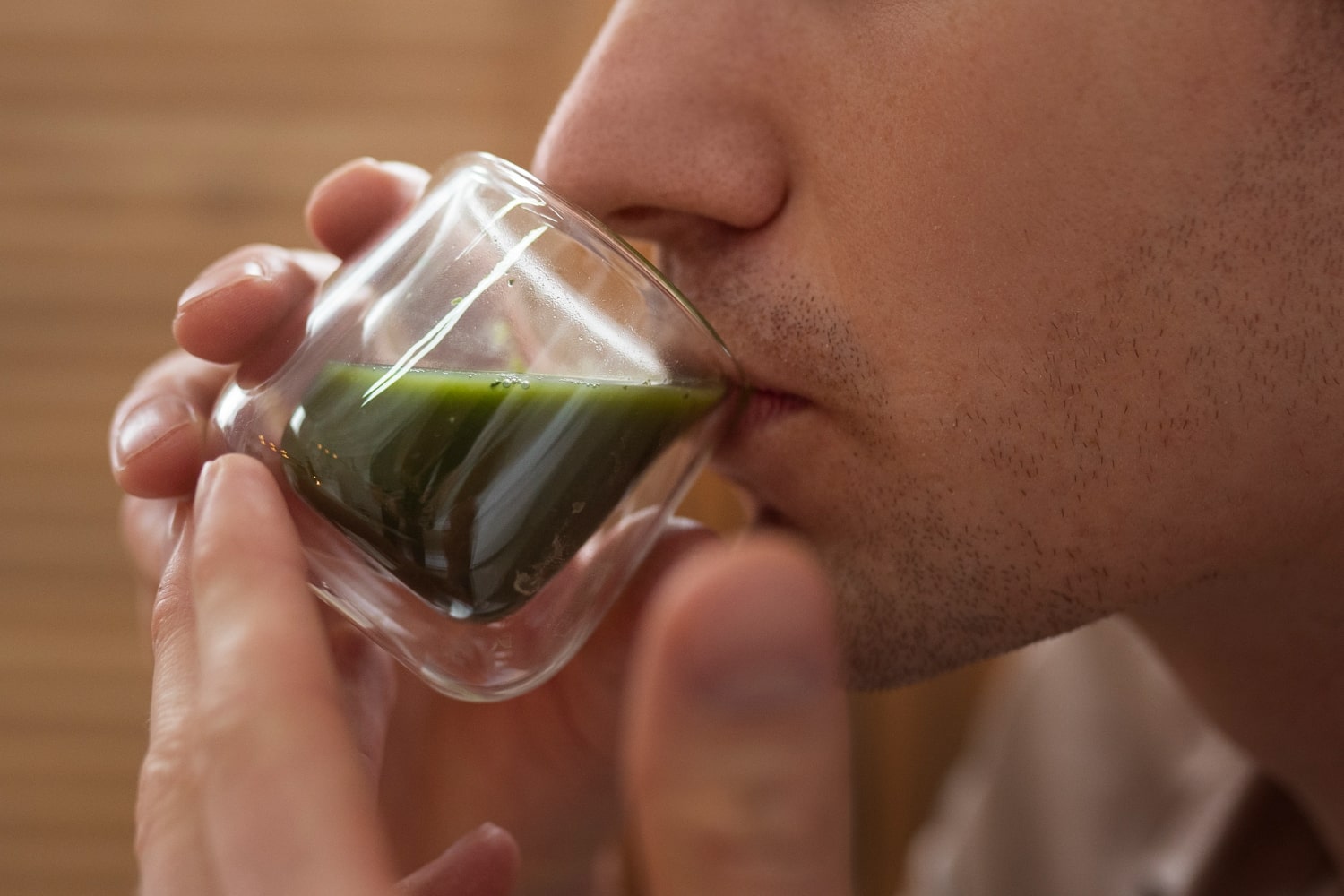
There are dozens of varieties of kratom, and the selection at your average smart shop can be overwhelming. Red Bali, White Maeng Da, Green Malay, extracts, tinctures, gummies: where do you even start? In this article, we explain how the different types of kratom are categorized, what science currently knows about the alkaloids it contains, and how you can responsibly determine which variety suits your needs. Important: Kratom is a potent natural product that acts on opioid receptors in the brain. Always use it responsibly, start with a low dose, and never combine it with alcohol, medications, or other substances.
What exactly is kratom?
Kratom comes from the leaves of the Mitragyna speciosa, a tropical tree from the Rubiaceae family, the same plant family as coffee. The tree grows primarily in Thailand, Indonesia (particularly Borneo and Sumatra), Malaysia, and Papua New Guinea. Traditionally, the leaves were chewed or brewed into tea by local communities. Field workers used it as a stimulant, similar to how coca was chewed in South America.
The active compounds in kratom are alkaloids. The plant contains at least 54 of them, but the lion’s share of the pharmacological activity comes from two: mitragynine (typically 40 to 66% of the total alkaloid content) and 7-hydroxymitragynine (7-HMG), which occurs only in trace amounts in fresh leaf material but is pharmacologically much stronger. Both compounds act as partial agonists on the mu-opioid receptor, the same type of receptor targeted by morphine-like substances, but with a crucial difference: mitragynine and 7-HMG exhibit so-called functional selectivity. They primarily activate the G-protein signaling pathway and, to a lesser extent, the β-arrestin-2 pathway, which is believed to be responsible for respiratory depression and constipation associated with classical opioids.1
In addition to the opioid effect, other receptor systems also play a role. Mitragynine binds as an agonist to α2-adrenergic receptors, which contributes to the stimulating effect at low doses. The smaller alkaloids paynantheine and speciogynine act on serotonin receptors (5-HT1A and5-HT2B), which has been associated with mood effects in animal models.2 A comprehensive pharmacological study from 2026 (Frontiers in Pharmacology) also identified, for the first time, lesser-known alkaloids such as epiallo-isopaynantheine and mitraciliatine, which exhibited diverse profiles: ranging from G-protein-selective agonism to mixed mu-antagonism and kappa-agonism.3
The dose-dependent effect of kratom is well documented: low doses (1 to 3 grams of powder) are experienced as stimulating, while higher doses (5 grams and more) exhibit a more sedative and analgesic profile. This biphasic nature makes kratom unusual among psychoactive plants.
The colors of kratom: red, white, and green
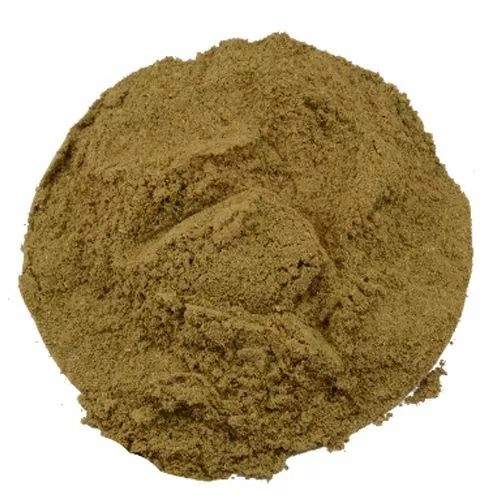 The primary way kratom is categorized is by the color of the leaf vein at the time of harvest. In practice, there are three main colors: red, white, and green. Each color is traditionally associated with a specific type of experience, but it is important to note that the science behind this is more nuanced than marketing suggests.
A study published in Psychoactives (2023) examined precisely this question. Respondents reported distinctly different subjective effects per color, in line with how the strains were marketed. But when the researchers had the alkaloid profiles of the corresponding products (from the same supplier) analyzed, there were no significant differences in mitragynine or 7-HMG content between the colors.2 The researchers suggest that the reported differences in effects may partly be an expectation effect, driven by marketing and word-of-mouth. That does not rule out the existence of real differences (the study only looked at the main alkaloids, not the dozens of smaller components that are also biologically active), but it does call for caution regarding bold claims.
That said, in practice, the color categories do provide an indication of the mood users report. Here is what they traditionally represent:
Red kratom (Red Vein)
Red kratom is associated with calm and relaxation. Many users choose red varieties for the evening hours, when the day is over and it’s time to unwind. It is the color most often chosen by people seeking a warm, subdued atmosphere. Popular red strains include Borneo Red and Maeng Da Red.
A 2018 analysis (Boffa et al., Natural Product Communications) that compared five different kratom strains found that Red Bali had the most complex alkaloid profile: 24 distinct alkaloids were detected, compared to 11 in the other strains studied.4 Whether this correlates with the subjective experience profile has not been established, but it is an indication that the chemical composition does indeed differ per strain, even if the concentration of the two main alkaloids is comparable.
White Kratom (White Vein)
White kratom is associated with alertness and mental clarity. It is the variety many users choose in the morning, or at times when a clear, energetic mood is desired. Varieties such as Borneo White and Maeng Da White are popular here.
Green kratom (Green Vein)
Green kratom is seen as the middle ground. Users describe it as balanced, suitable for social situations or creative work, without veering too strongly toward relaxation or stimulation. In the Boffa study, Green Malay scored highest in total mitragynine content (59.7% of the isolated alkaloids) and total alkaloid yield, which gave it the strongest analgesic and anti-inflammatory effects in animal models.4 Well-known green varieties include Bali Green, Green Malay, and Maeng Da Super Green.
It’s important to remember that these descriptions are based on user experiences and traditional associations. Your experience may differ. The only way to discover what works for you is to start cautiously with low doses.
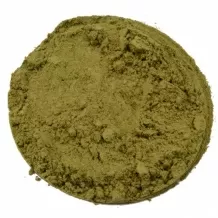
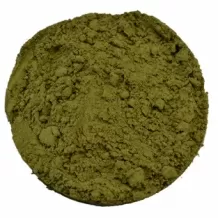
Origin: Bali, Borneo, Thai, Maeng Da
In addition to color, origin plays a role. Just as with coffee, climate, soil composition, altitude, and harvest season influence the final alkaloid ratio. A Thai study on seasonal variation found that the total alkaloid content in the fall (October) was significantly lower than in the winter (January) and summer (June).2 Region matters, but so does batch-to-batch variation within the same region.
The most well-known origins in the assortment:
- Bali: Best known for the red variety. A classic that many users choose as their first strain. In the Boffa study, Red Bali had the most diverse alkaloid profile of all tested strains.
- Borneo: Available in red, white, and green. As an island, Borneo is known for its extreme biodiversity, and that variety is reflected in the kratom selection.
- Thai: Thailand has the longest documented history of kratom use. In Thai leaves, mitragynine is typically the dominant alkaloid, with concentrations reaching up to 66% of the total.
- Maeng Da: Not a place of origin, but a quality designation. The name roughly translates to “premium quality” in Thai. Maeng Da is selected for potency and is available in red, white, and green.
Kratom extracts: concentrated and potent
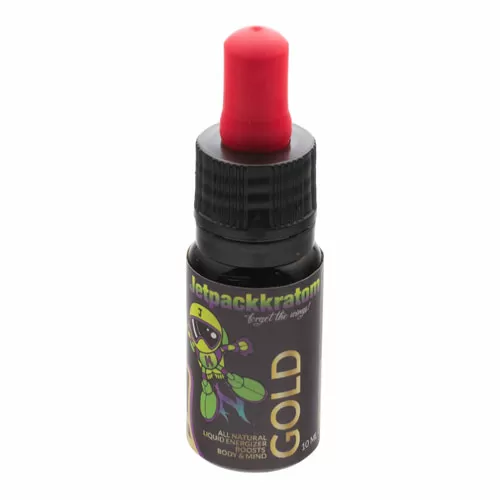 For experienced users, there are kratom extracts. These products contain a concentrated amount of alkaloids, so you need a much smaller amount than with regular powder. It is essential to be extra careful with these: always start with a minimal dose.
A recent development worth noting: in the U.S., products containing enriched or semi-synthetic 7-hydroxymitragynine have entered the market in recent years, often marketed as “kratom” but pharmacologically fundamentally different from natural leaf material. A 2025 review (Pharmaceutical Biology) warns that 7-HMG in isolated form may have a potency approaching or exceeding that of morphine, including the risk of respiratory depression.5 Dutch-Smart sells exclusively botanical kratom extracts based on natural leaf material, not these isolated semi-synthetic products.
Extracts come in various forms:
- Powder extracts: Concentrated powders, often with a multiplication factor (e.g., 10x or 20x) indicating how many grams of leaf were used per gram of extract.
- Liquid extracts and tinctures: Products like Jetpack Kratom Gold or Maeng Da Kratom 75 mg/ml offer precisely dosable liquid with a dropper. Check out the kratom tinctures for more options.
- Resin extract: A thick, tar-like substance such as Kratom Bali Resin Extract, which is dissolved in hot water.
- Gummies and sprays: Newer forms like Kratom Gummies or Kratom Sprays offer an accessible yet still potent way to consume kratom.
How do you choose the right kratom?
A few practical steps to help you make a choice:
- Determine your intention. What kind of experience are you looking for? Relaxation after a long day points toward red. A clear-headed morning points toward white. Something balanced for daytime use points toward green.
- Always start low. For powder, 1 to 2 grams is a good starting point. Only increase the dose next time if the effect was too mild. Never increase the dose during the same session. A precision scale is essential.
- Wait it out. The effects come on gradually, usually within 30 to 60 minutes. Wait at least an hour before considering taking more.
- Keep a log. Note which strain you took, how much, when, and how you experienced it. Every body reacts differently, and your own experience is the best guide.
- Choose the right form. New to this? Start with regular powder or capsules. Extracts are for advanced users who know what they’re doing.
Interactions and Tolerance
Kratom alkaloids inhibit the liver enzymes CYP3A4 and CYP2D6, which metabolize a large number of medications.1 This means that kratom can enhance or prolong the effects of medications in ways that are difficult to predict. Never use kratom in combination with opioids, benzodiazepines, antidepressants, or other psychoactive substances.
With regular use, the body builds up a tolerance to the effects of mitragynine. Higher doses are then needed to achieve the same effect, with an increasing risk of dependence. Users who consume kratom daily and suddenly stop report withdrawal symptoms similar to those of classic opioids: irritability, muscle pain, insomnia, and restlessness. Therefore, take regular breaks and avoid daily use.
Harm reduction (18+)
Kratom deserves the same respectful treatment as any other psychoactive substance. The most important guidelines at a glance:
- Do not combine with alcohol, medications, or other psychoactive substances. Kratom inhibits liver enzymes that break down many medications, making interactions unpredictable and potentially dangerous.
- Start low, build up slowly. 1 to 2 grams of powder is a sensible starting point. Extracts require even lower doses.
- Take breaks. Daily use increases the risk of tolerance and dependence. Schedule kratom-free days.
- Know your source. Only buy kratom from a supplier that guarantees quality and purity. Unregulated products, particularly isolated 7-HMG products from the U.S., present a different risk profile than botanical leaf material.
- Not for everyone. Do not use kratom if you are pregnant, breastfeeding, have liver or kidney problems, or are dealing with mental health conditions. If in doubt, consult a doctor.
- Do not drive. Never drive or operate machinery while under the influence of kratom.
- Age restriction: For adults 18 years of age and older only.
You can find more information about kratom on the kratom information page in the knowledge base or in the kratom category of the store.
Sources
Henningfield, J.E. et al. (2024) - An update on the clinical pharmacology of kratom, Expert Review of Clinical Pharmacology
Grundmann, O. et al. (2023) - Examining the psychoactive differences between kratom strains, Psychoactives
Bhowmik, S. et al. (2026) - Multifaceted modulation of human opioid receptors by kratom alkaloids, Frontiers in Pharmacology
Boffa, L. et al. (2018) - Alkaloid profiles and activity in different Mitragyna speciosa strains, Natural Product Communications, 13(9)
Henningfield, J.E. et al. (2025) - From kratom to 7-hydroxymitragynine: evolution of a natural remedy into a public-health threat, Pharmaceutical Biology


