
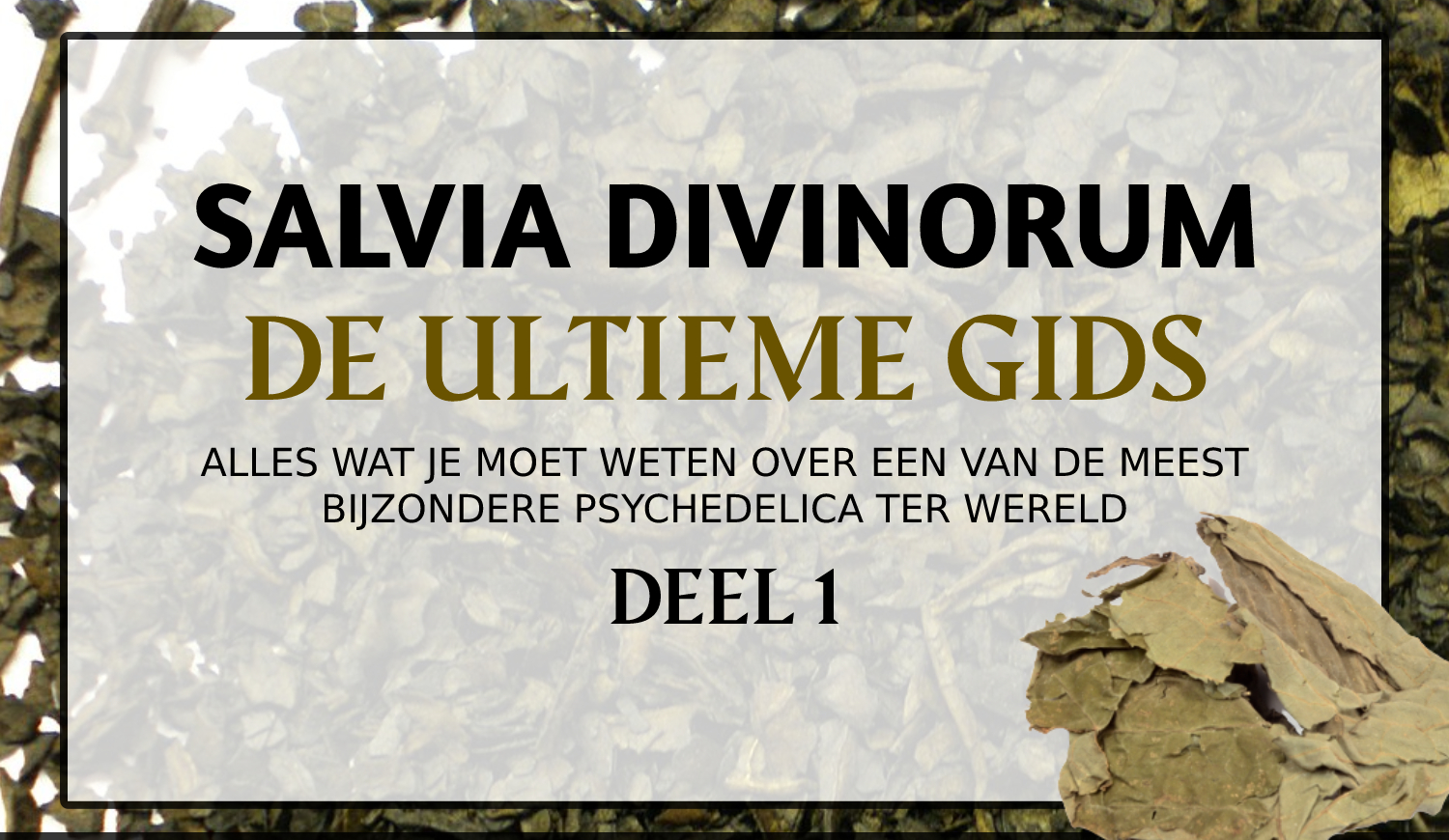
Welcome to Dutch-Smart’s Salvia Divinorum 101 guide! Welcome to Dutch-Smart’s Salvia Divinorum 101 guide! This comprehensive guide has been specially compiled to inform you about everything you need to know about Salvia Divinorum, a powerful and fascinating natural psychedelic. We dive deep into the history, use, effects, and science behind this mysterious plant.
In this guide, you’ll find 11 detailed articles covering every aspect of Salvia Divinorum. We start with its origins and history, followed by information on its botanical aspects, the active ingredient, traditional use, experiences and effects, and research into its therapeutic and pharmacological potential. We also discuss its global legal status, safe use, various methods of consumption, personal experiences, and answer the most frequently asked questions about Salvia Divinorum.
Whether you’re a seasoned psychonaut or simply curious about the world of Salvia Divinorum, this guide has something for everyone. We invite you to immerse yourself in this wondrous world and discover all that Salvia Divinorum has to offer. Enjoy reading!
Overview of Articles
- Introduction to Salvia Divinorum: Origin, History, and Use
- The Botanical Aspects of Salvia Divinorum: Characteristics, Growth, and Care
- Salvinorin A: The Active Ingredient in Salvia Divinorum
- Traditional Use of Salvia Divinorum in Indigenous Cultures
- The Effects of Salvia Divinorum: An In-Depth Exploration of the Experience
- Salvia Divinorum and Modern Science: Research into Therapeutic and Pharmacological Potential
- Legal Status of Salvia Divinorum: A Global Overview
- Safe use of Salvia Divinorum: Guidelines and precautions
- Methods of consuming Salvia Divinorum: Leaves, Extracts, and Smoke-Free Options
- Salvia Divinorum Trip Reports: Personal Experiences and Insights
- Frequently Asked Questions About Salvia Divinorum: Answers to the Most Common Questions
In this first article, we’ll dive deep into the origins, history, and use of this fascinating plant. So buckle up, because we’re going on a mystical journey through time and space to uncover the secrets of Salvia Divinorum. But don’t worry, we won’t be burning any sage leaves while writing this article—promise!
Origins of Salvia Divinorum
Salvia Divinorum, also known as “ska Maria Pastora” or “the herb of the divine seer,” is a plant from the mint family and is native to the mountainous regions of the Sierra Mazateca in Oaxaca, Mexico. This plant has a rich history closely tied to the indigenous Mazatec culture.
The Sierra Mazateca, a remote and inaccessible area, has contributed to the preservation of Mazatec traditions and the exclusive use of Salvia Divinorum within their community. It is a humid and misty forest, which is an ideal environment for the growth of Salvia Divinorum. The plant grows naturally in the shade of larger trees and prefers moist, well-drained soil.
The leaves of Salvia Divinorum are large and dark green, with striking white veins. The plant can grow to over a meter tall and rarely produces flowers outside its natural habitat. When Salvia Divinorum blooms, the flowers are white with a purple tinge and hang in clusters.
History and Cultural Use
The Mazatecs have used Salvia Divinorum for centuries for religious and spiritual purposes. They believed the plant served as a medium for communicating with the divine and gaining insights. During shamanic ceremonies, they chewed the leaves or drank an infusion to enter a trance and induce visionary experiences.
The name 'ska Maria Pastora' refers to the image of the Virgin Mary as a shepherdess, which underscores the plant’s spiritual significance. The Mazatec shamans used Salvia Divinorum to heal illnesses, locate lost objects, and communicate with the spirit world. It is important to note that the use of Salvia Divinorum within Mazatec culture was always approached with great reverence and respect.
Salvia Divinorum remained a well-kept secret of the Mazatecs for centuries, until Western researchers and botanists were introduced to the plant in the 1930s and 1960s. Since then, Salvia Divinorum has attracted the attention of both scientists and enthusiasts interested in the plant’s unique effects. Researchers such as R. Gordon Wasson and Albert Hofmann, known for their work with other hallucinogenic plants, were among the first to introduce Salvia Divinorum to Western science.
The Rise of Salvia Divinorum in the West
In the 1990s and 2000s, Salvia Divinorum spread like wildfire across the Western world, thanks to the growing interest in alternative spirituality and entheogenic plants. Salvia extracts and dried leaves became increasingly available in smart shops and online stores, allowing a new audience to discover the unique properties of this plant.
At the same time, scientists began to investigate the chemical composition and pharmacological effects of Salvia Divinorum. In 1982, the active ingredient, Salvinorin A, was identified by Alfredo Ortega, a Mexican chemist. This molecule was found to be responsible for the hallucinogenic effects of Salvia Divinorum and remains one of the most potent natural psychedelics known to date.
The emergence of Salvia Divinorum in the West was accompanied by a wide range of experiences and interpretations. Some people used the plant as a tool for personal growth and spiritual development, while others saw it as a way to experiment with unusual and intense sensory experiences. These diverse approaches have led to a vibrant online community where people share their experiences and offer advice on the use of Salvia Divinorum.
Current Use and Future Prospects
Today, Salvia Divinorum is still used by many people around the world for recreational and spiritual purposes. Although the plant has become illegal in some countries and states due to concerns about potential health risks and abuse, it remains legal and freely available in many other places.
Despite the controversies surrounding the use of Salvia Divinorum, there are also indications that the plant has therapeutic potential. Researchers are studying the possible applications of Salvinorin A for the treatment of conditions such as depression, addiction, and chronic pain. Although it is still too early to draw definitive conclusions, this opens up new perspectives for the future role of Salvia Divinorum in medicine and mental health care.
In conclusion...
In this article, we have provided an introduction to the origin, history, and use of Salvia Divinorum. In the following articles of our Salvia Divinorum 101 guide, we will delve deeper into specific aspects of this intriguing plant. We will cover topics such as its botanical characteristics, methods of consumption, safe use, legal status in various countries, and much more. So stay tuned to learn more about Salvia Divinorum and its unique properties.
We hope this article has given you a better insight into the fascinating world of Salvia Divinorum and that you are inspired to explore further. Remember that knowledge and respect for the plant are crucial for a safe and meaningful experience. So keep learning, stay curious, and enjoy the journey!
In the meantime, if you have any questions or would like more information, please don’t hesitate to contact Dutch-Smart. We’re here to help and support you on your journey of discovery into the world of Salvia Divinorum and other fascinating entheogenic plants.


