


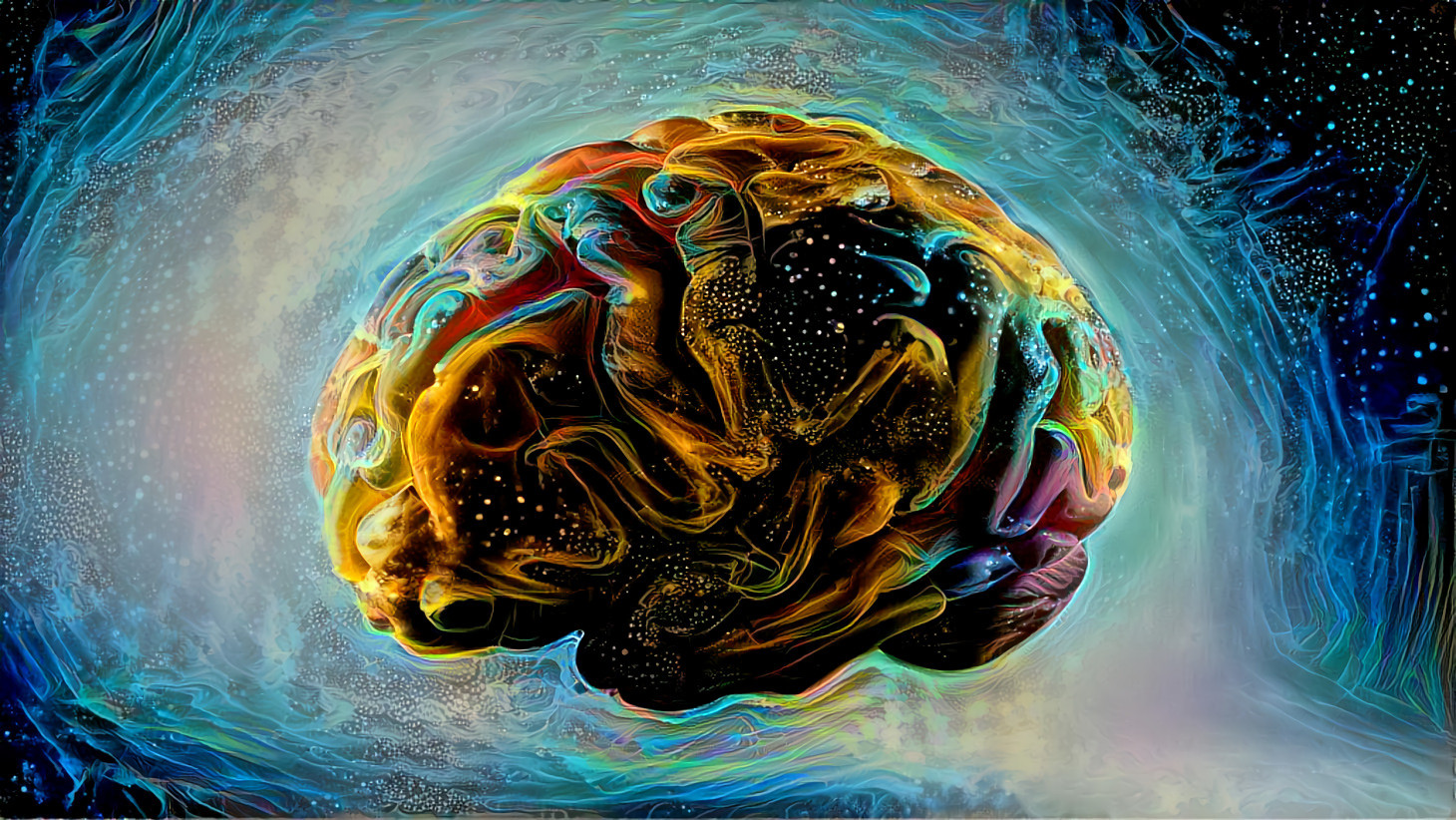
Is it possible to truly understand the extremely vivid visual experiences that occur while taking psychedelics? A group of brilliant minds at the International Brain Laboratory of the Champalimaud Center for the Unknown in Lisbon are eager to find out. In a new article in the journal Neuroscience of Consciousness, they discuss advanced machine learning methods to better understand psychedelic substances.
Read also: Mike Tyson downs 5 grams of magic mushrooms during a podcast
Mind-altering effects
 Lately, the scientific world has been abuzz with research on psychedelic substances. And that’s no surprise: their potential applications seem endless! Substances like DMT, LSD, and psilocybin—the active ingredient in magic mushrooms and magic truffles—are already known, for example, to selectively alter the function of serotonin receptors in the nervous system. Yet, real knowledge about them is limited.
Michael Schartner and his colleague Christopher Timmermann agree. They believe there is still much to learn about psychedelic experiences and their effects on the brain.
Read also: Everything you need to know about magic mushrooms and magic mushroom grow kits
Changes in the brain
How do they plan to find out? Artificial intelligence. “For me, the most interesting feature of the brain is that it generates experiences. The brain contains an internal model of the world that is constantly updated through sensory information, and some parts of this model are consciously perceived—that is, experienced,” Schartner explains.
“If this process of model updating is disrupted—for example, by psychedelics—the internal model can go off the rails and may have very little to do with the real world. Such a disruption is therefore a key case in the study of how the internal model is updated, as it can be directly experienced by the disrupted brain—and verbally reported.”
“The process of generating natural images with deep neural networks can be disrupted in visually similar ways and can offer mechanistic insights into its biological counterpart—as well as a tool to illustrate verbal reports of psychedelic experiences,” said Schartner.
Read also: This is how a single dose of ayahuasca can lead to lasting changes in the brain
Deep neural networks
"Deep neural networks" sound interesting, but what exactly are they? A deep neural network is what artificial intelligence researchers call an artificial neural network with multiple interconnected computational layers. Such networks can be used to generate highly realistic images of human faces—including the wildly popular “deepfakes” that are becoming increasingly common. They’re also used in techniques like facial recognition technology.
“Deep neural networks—the workhorse behind many impressive technical feats in machine learning—are the state-of-the-art model for parts of the human visual system,” Schartner told PsyPost, a well-known outlet covering the human psyche. “They can help illustrate how psychedelics disrupt perception and can be used to inform hypotheses about how sensory information is prevented from updating the brain’s model of the world.”
Read also: The remarkable similarities between psychedelics and dreams
Much to learn
In a previous study, the scientist was involved in discovering how psychedelic substances caused a sustained increase in neural signal diversity. Yet it seems there is still a great deal to learn in this area. “But the neural correlates of consciousness are still ‘far from clear,’ Schartner said. “The ventral visual stream in the human brain appears to be key to visual experiences, but it is certainly not sufficient. The exact role of serotonin in transmitting sensory information also remains to be explained.”


