

If you’re a fan of psychedelics, there’s a very good chance you’ll hear or read about Mike “Zappy” Zapolin, one of the fastest-rising “thought leaders” in the field of the therapeutic use of psychedelic compounds such as LSD, psilocybin, ketamine, and DMT. Haven’t heard of this psychedelic luminary yet? Well, that’s about to change today!
“I had a spiritual midlife crisis around 2011, where I had done everything society had told me to do, but I wasn’t entirely satisfied...”
From Wall Street to psychedelic “healing”
After working on Wall Street for quite a few years, the now 53-year-old Zapolin made a fortune by purchasing domain names like Beer.com and Music.com when the internet was just starting to take off. Now he spends his days helping clients find their spiritual selves. But that wasn’t always the case. The man himself didn’t even know what to do with himself back then.
“I had a spiritual midlife crisis around 2011, where I had done everything society told me to do, but I wasn’t entirely satisfied,” Zapolin—who has no medical background—tells Page Six. “I’d had these wonderful psychedelic experiences when I was younger, and I realized at that moment that I had to look inside my own head for answers and healing.”
Read also: These are the effects of sativa cannabis
Ayahuasca and Michelle Rodriguez
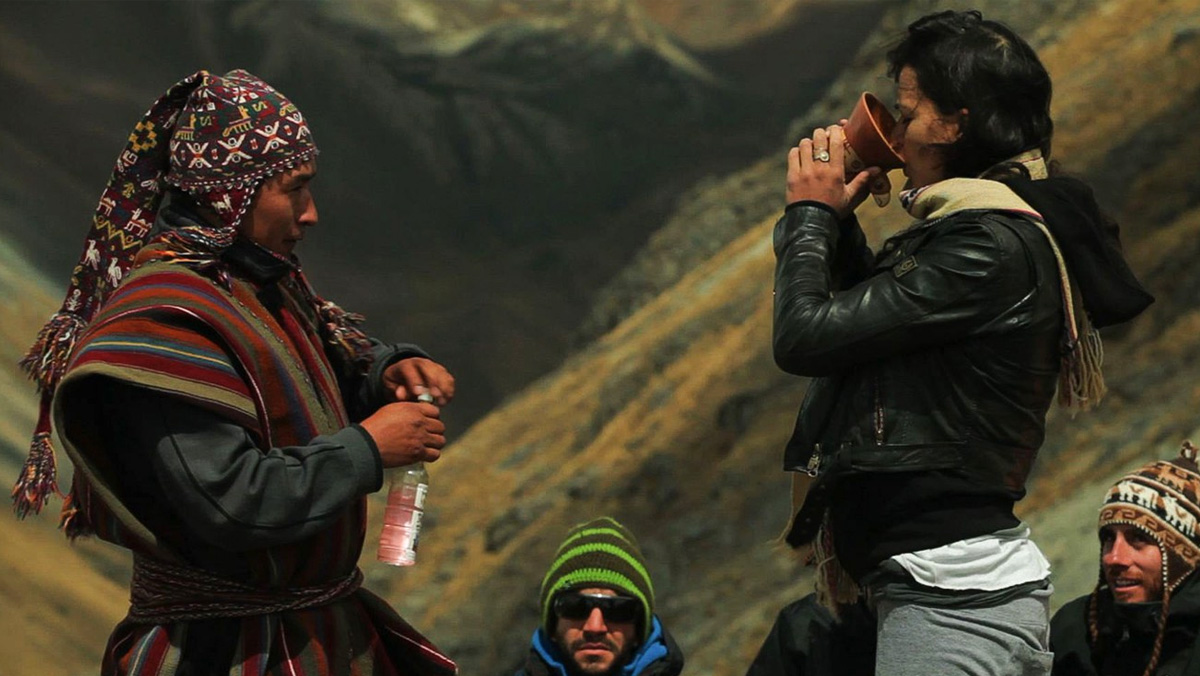
The man decided to tap into some of his connections and enlist friends and family to make a film about a trip to Peru to conduct an ayahuasca ceremony there. He also collaborated with Deepak Chopra and Fast and Furious star Michelle Rodriguez for this project. “I went to her house in Venice, California, and I started talking to her and telling her what we were doing, and she said, ‘I’m in!’” Zappy recalls. “And she handed me her passport, and I thought, ‘Holy crap, this is really happening!’”
The trip to Peru—which included not only ayahuasca but also an experience with the mescaline-containing San Pedro cactus atop a mountain—was later released as the film “The Reality of Truth.” In the film, Rodriguez explores her feelings in the aftermath of the death of her “Fast & Furious” co-star Paul Walker. “My ayahuasca trip made me sad that he left me here,” she says in the film. “It wasn’t sadness that he’s gone. It was more jealousy that he was there first.”
Read also: Is 5-MeO-DMT even more special than “normal” DMT?
Lamar Odom’s path to recovery
In addition to Rodriguez, Zapolin has also had psychedelic experiences with basketball player Lamar Odom. He invited Odom after a request from the athlete’s friend. The much-discussed player—who had a history of substance abuse—flew to Florida for a full-fledged ketamine treatment. “I’m sure he was a little nervous, but he also knew he’d tried everything else and still had anxiety and addiction issues,” says Zappy.
“When Lamar came out of his first ketamine treatment, he said, ‘I’ve never felt this good,’” Zapolin recounts. “After he felt comfortable and stabilized, I said, ‘You need to come to Mexico and do an ibogaine treatment with me. “Since you’re an African-American man, there’s an African root known to break addiction,” he suggested. “And he’s such a cool, open guy that he thought, ‘Okay, let’s do it. I’m ready.’” Four months later, he was playing in a tournament in Dubai again, had reconnected with his ex-wife and children, and had also brought his father to New York for ketamine treatment.
Read also: Are magic mushrooms legal? And what about magic truffles?
The Mind Army
Currently, Zappy is primarily focused on an organization he calls “The Mind Army.” They are trying to reform the legislation surrounding Zapolin’s preferred compounds for mental well-being, for example through a Change.org petition that seeks to secure an executive order from President Trump. With this, he hopes to legalize mind-expanding substances such as psilocybin, ayahuasca, iboga, peyote, and LSD. Whether that’s possible with a conservative president remains to be seen.
“We must be able to look within our own minds for answers and healing, by any means necessary,” says Zapolin about his reform efforts. “No one in 2020 should be able to say, ‘Hey, alcohol is good, tobacco is good, but psilocybin mushrooms are bad. You’re not allowed to use them to help yourself.’” And at Dutch-Smart, we couldn’t agree more.


