

Chaga doesn't look like a mushroom. It's a black, cracked lump on the trunk of a birch that, from a distance, looks like a piece of burnt wood. Break it open and you'll see a rusty brown to orange-yellow interior. In Siberia, Scandinavia and Canada, chaga has been drunk as tea for centuries. In this guide you'll learn what chaga actually is, how to tell it apart from other fungi on birch trees, which form suits you, how to make tea from it and why you shouldn't take too much.
What is chaga?
Chaga is the fungus Inonotus obliquus, also known as the clinker polypore or cinder conk. It mainly grows on living birch trees in cold regions of the Northern Hemisphere, and occasionally on alder, beech or poplar. The fungus enters the tree through a wound, such as a broken branch, and over the years forms a hard lump there. That lump isn't a real mushroom but a sclerotium: a compact mass of fungal threads. It takes at least five years, and often much longer, before such a lump is ready to harvest.
The real fruiting bodies, which the fungus uses to spread its spores, only appear under the bark once the tree or part of it has died, and you rarely see them. So for tea and extracts you always use the lump. In the Netherlands chaga is rare. What you see for sale almost always comes from Scandinavia, the Baltic states, Russia or Canada.
Chaga or another fungus on a birch?
More fungi grow on birches, and not every black lump is chaga. Here's how to tell them apart:
| Chaga | Tinder fungus | Birch polypore | Burl | |
|---|---|---|---|---|
| Scientific name | Inonotus obliquus | Fomes fomentarius | Fomitopsis betulina | Not a fungus, an overgrowth of the wood |
| Shape | Irregular lump, grows out of the trunk | Hoof-shaped, like a horse's hoof against the trunk | Cushion or kidney-shaped, sticks out like a shelf | Round bulge, covered in bark |
| Outside | Black, deeply cracked, like charcoal | Grey to brown, with rings | White to light brown, smooth | Ordinary birch bark |
| Underside | No tubes or pores | Light brown pores | White pores | Bark |
| Inside | Rusty brown to orange-yellow, granular | Brown, corky | White, soft to corky | Wood |
| For tea | Yes | No | No | No |
Watch the names: the birch polypore is a different species from chaga, even though both grow on birch. Chaga is the black one without pores.
What's in it?
Chaga contains polysaccharides such as beta-glucans, triterpenes such as betulin, betulinic acid and inotodiol, and a lot of melanin, the pigment that makes the outside black. Betulin and betulinic acid originally come from the birch itself: chaga takes them from the bark. Cultivated chaga, grown on a nutrient medium instead of on a tree, therefore contains a different and smaller mix of compounds. Chaga also contains a lot of oxalate, more on that under Safety. No health claims have been approved in the EU for chaga, so we don't promise any effects either.
Which form should you choose?
| Product | Form | Use | Best for |
|---|---|---|---|
| Chaga 100 grams | Extract powder | 1 teaspoon (1.5 grams) a day in hot water or a shake | Anyone who wants to drink chaga as tea |
| Chaga extract 30 ml | Liquid extract | 5 drops twice a day | Anyone who wants to keep it small and quick |
| Chaga extract capsules | 120 capsules of 400 mg | 1 capsule twice a day with a meal | Anyone who'd rather skip the taste |
All three are extracts, not ground lump. In an extract, the compounds have already been drawn out of the hard chaga with hot water and alcohol, so you don't need to steep it for hours. You'll find more mushrooms in our medicinal mushrooms category.
Making chaga tea in 5 steps
- Take 1 teaspoon of chaga extract powder, about 1.5 grams.
- Bring water to the boil, then let it cool for a minute.
- Pour a cup of water, about 200 ml, over the powder and stir well.
- Leave it for 5 minutes and stir once more. Extract powder dissolves almost completely.
- Drink it warm. The taste is earthy and slightly bitter, a bit like weak coffee. A splash of (plant-based) milk, honey or cinnamon rounds it off.
Tea from chaga chunks
If you have whole chunks of chaga, it works differently. Whole chaga is so hard that a short steep does very little. Let a few pieces the size of a sugar cube simmer gently for 1 to 3 hours in water just below boiling point, until the tea is dark brown. You can reuse the same chunks a few times, just let them dry thoroughly in between to prevent mould.
Tasty combinations
Chaga goes well with warm flavours: cinnamon, ginger, cardamom or a little cacao. You can also stir the powder into your coffee, smoothie or porridge. Want to know more about other mushrooms? Read our blogs on five medicinal mushrooms and reishi.
Harvesting chaga yourself?
Foraging for chaga sounds appealing, but in the Netherlands it isn't a good idea. The fungus is rare here, and in forests and nature reserves you can't just take things off trees. If you're in Scandinavia or Canada, stick to these rules:
- Ask the owner or manager of the forest for permission, and check the local rules.
- Only harvest from a living birch. Chaga from a dead tree is spent and crumbles.
- Choose a lump at least the size of a fist and leave a quarter to a third behind, so it can grow back.
- Use a hatchet or broad knife and don't damage the wood of the tree.
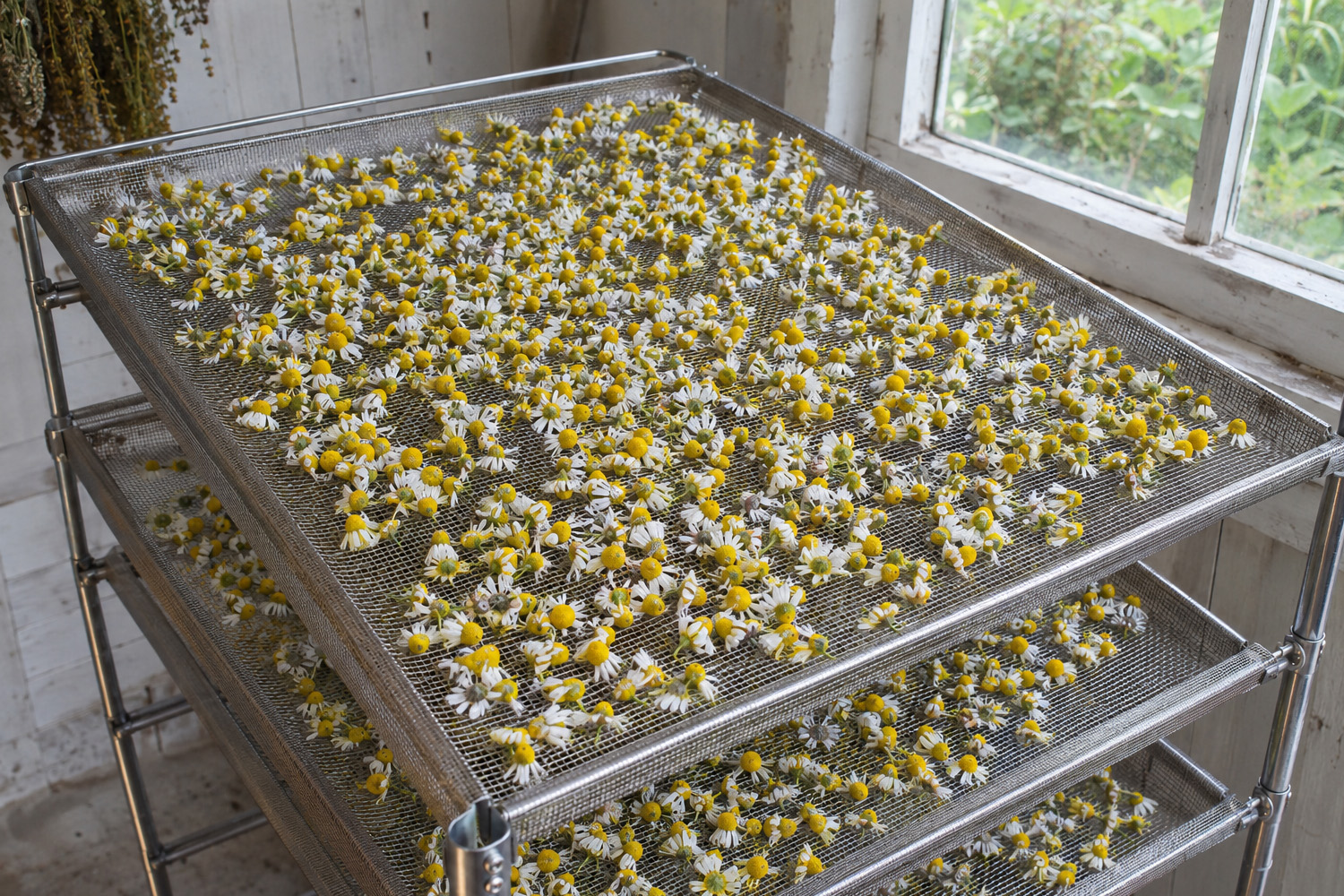
- Break the lump into walnut-sized pieces and dry them for a few days somewhere airy, or in a food dehydrator at no more than 40 °C. Damp chaga goes mouldy.
Safety
- Oxalate: dried chaga contains between 2.8 and 11.2 grams of oxalate per 100 grams, far more than spinach. There are several reports of serious kidney damage in people who took large amounts of chaga daily for months. So stick to the dosage on the packaging and don't take it for years on end.
- Kidneys: if you have kidney problems or kidney stones, don't use chaga.
- Medication: if you take blood thinners, diabetes medication or drugs that suppress your immune system, check with your doctor or pharmacist first.
- Pregnant or breastfeeding: don't use it. Don't give it to children either.
- Allergy: if you get itching, a rash or stomach and bowel complaints, stop.
Common mistakes
- Taking every black lump on a birch for chaga: look for the rusty brown inside and the absence of pores.
- Mixing up birch polypore and chaga: the white birch polypore is a different species.
- Steeping whole chunks briefly: then it tastes like hot water. Whole chaga needs hours, extract powder a few minutes.
- Taking more than the dosage: more isn't better here, because of the oxalate.
- Storing used chunks wet: they go mouldy. Let them dry completely in between.
- Harvesting chaga from a dead tree: it's crumbly and contains little.
Frequently asked questions
Is chaga a mushroom?
Chaga is a fungus, but what you use isn't a mushroom. It's a sclerotium, a hard lump of fungal threads that grows on a living birch.
What does chaga tea taste like?
Earthy, mild and slightly bitter, sometimes with a hint of vanilla. Many people find it similar to weak coffee or black tea.
Does chaga contain caffeine?
No, chaga contains no caffeine. So you can drink it in the evening too.
How much chaga can you take per day?
Follow the dosage on the packaging; for our extract powder that's 1 teaspoon (1.5 grams) a day. Don't take more and don't use it for years without a break, because of the high oxalate content.
Does chaga grow in the Netherlands?
Very occasionally, on old birches. The fungus is rare here. Most chaga comes from Northern Europe, Russia and Canada.
Where can I buy chaga?
You'll find the chaga extract powder, the chaga extract drops and the chaga capsules among our medicinal mushrooms.
Sources: Wikipedia (EN), Inonotus obliquus, Maine Forest Service, Chaga fact sheet, PubMed, Chaga mushroom-induced oxalate nephropathy.


