


Hibiscus tea is deep red, fresh and sour, a little like cranberry. In Egypt it's called karkadé, in Mexico agua de jamaica and in West Africa bissap. Yet you don't make it from the flowers of the hibiscus in your garden, but from the fleshy red calyces of one particular species. In this guide you'll learn which hibiscus is used for tea, what's in it, how to brew it hot and cold, what the downsides are and what to keep in mind.
Which hibiscus is used for tea?
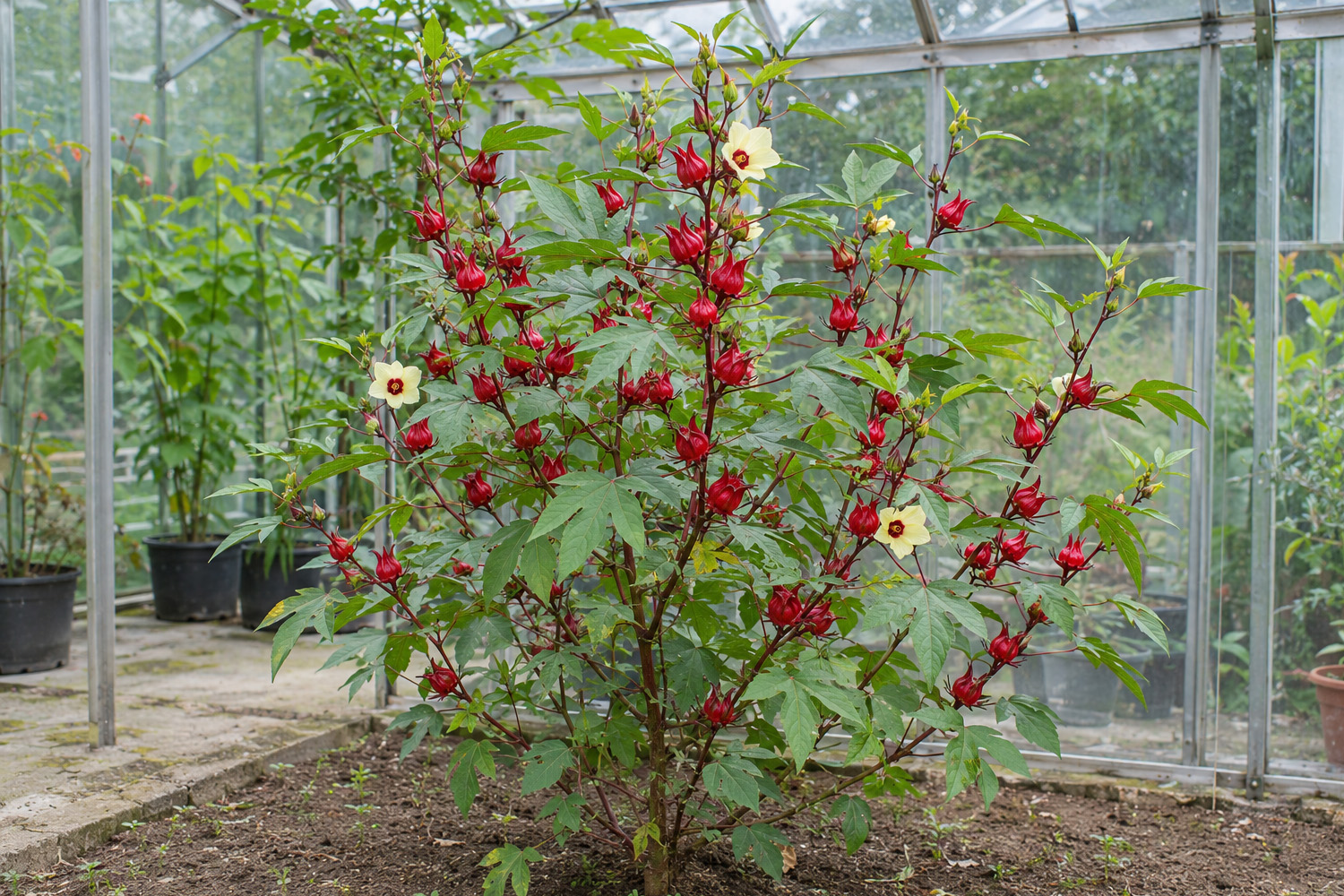
Hibiscus tea comes from Hibiscus sabdariffa, also called roselle, a plant from the mallow family (Malvaceae). It's a shrubby plant 1 to 2 metres tall with reddish stems. After its pale yellow to pink flowers, the calyx around the fruit swells into a thick, fleshy, bright red calyx. Those calyces are harvested and dried, and they're the "petals" in your hibiscus tea. The plant is mainly grown in Sudan, Egypt, Mexico, Thailand and West Africa.
Tea hibiscus or garden hibiscus?
| Roselle | Chinese hibiscus | Rose of Sharon | |
|---|---|---|---|
| Botanical name | Hibiscus sabdariffa | Hibiscus rosa-sinensis | Hibiscus syriacus |
| Where | Tropics and subtropics, field crop | Houseplant | Garden shrub, hardy |
| Flower | Pale yellow to pink, with a dark centre | Large, red, pink, yellow or orange | White, pink, purple or blue |
| Notable | Thick, fleshy, bright red calyx after flowering | Large, glossy flowers | Flowers in late summer |
| For tea | Yes, the dried calyces | No | No |
The flowers of a houseplant or garden hibiscus have often been treated with pesticides and don't taste like hibiscus tea. Don't use them.
What's in it?
The red colour comes from anthocyanins, plant pigments also found in berries and red cabbage. The sour taste comes from organic acids such as citric acid, malic acid and hibiscus acid. Hibiscus tea contains no caffeine. No health claims have been approved in the EU for hibiscus, so we don't promise any effects either.
Which form should you choose?
| Form | Use | Best for |
|---|---|---|
| Dried calyces | Tea, 1 to 2 teaspoons per cup, or cold-brewed | Anyone who wants to brew tea |
| Roselle 1:1 extract | Drops in water, tea or a cocktail | Anyone who wants to add a quick hint of hibiscus |
| Homemade tincture | Drops in water | Anyone who wants to make their own extract, see our blog on making a herbal tincture |
You'll find more herbal extracts among our tinctures.
Making hibiscus tea in 5 steps
- Take 1 to 2 teaspoons of dried hibiscus calyces, about 2 to 3 grams.
- Pour a cup of boiling water over them, about 250 ml.
- Let the tea steep for 5 to 10 minutes. The longer, the more sour and deeper red it gets.
- Strain out the calyces.
- Taste it and soften it with a little honey if you like. Drink it hot, or let it cool and drink it over ice.
Cold hibiscus tea (agua de jamaica)
Put about 15 grams of dried calyces in a litre of cold water and leave it to steep in the fridge for 6 to 12 hours. Strain it and sweeten to taste with honey or sugar. In Mexico it's drunk like this with meals, often with a slice of lime.
Tasty combinations
Hibiscus is sour and fruity and goes well with ginger, cinnamon, mint and orange peel. A few drops of ginger extract or peppermint extract add an extra layer. In the Caribbean it's made into a Christmas drink with ginger and cinnamon, called sorrel there. You'll find more tea herbs in the tea category.
Can you grow hibiscus yourself?
You can, but it's tricky in the Netherlands. Roselle is a tropical plant that needs a lot of warmth and only flowers when the days get shorter, late in summer. After that the calyces still need a few warm weeks. Sow indoors in February or March at 20 to 25 °C, and keep the plant in a warm greenhouse or conservatory all summer. Outdoors it usually gets too cold before the calyces are ripe.
Downsides and safety
- Medication: hibiscus can affect how blood pressure medication, diuretics, diabetes medication and paracetamol work. If you take medication, check with your doctor or pharmacist first.
- Pregnant or breastfeeding: don't drink hibiscus tea, its safety hasn't been established.
- Teeth: hibiscus tea is acidic and can affect your tooth enamel. Drink it with meals, rinse your mouth with water afterwards and don't brush straight away.
- In moderation: stick to two to three cups a day.
- Allergy: if you get itching or a rash, stop.
Common mistakes
- Making tea from a garden or houseplant hibiscus: only use the calyces of Hibiscus sabdariffa.
- Steeping too long: after fifteen minutes it becomes very sour and astringent.
- Too many calyces: start with a teaspoon, the taste is strong.
- Storing the calyces open: colour and flavour fade. Keep them in a dark, airtight jar.
- Underestimating stains: hibiscus tea stains fabric and light worktops. Wipe it up straight away.
- Wanting to harvest outdoors in the Netherlands: the plant needs a warm greenhouse.
Frequently asked questions
What are the downsides of hibiscus tea?
It's acidic and can affect your tooth enamel. It can affect how some medication works, so check with your doctor if you take medication. Don't drink it if you're pregnant or breastfeeding.
Is hibiscus tea healthy?
Hibiscus has been drunk for centuries and has been researched, but no health claims have been approved in the EU for hibiscus. Drink it in moderation.
How often can you drink hibiscus tea?
Two to three cups a day is a common limit. If you take medication, check with your doctor first.
Can you make tea from any hibiscus?
No. Hibiscus tea comes from the calyces of Hibiscus sabdariffa. A houseplant or garden hibiscus isn't meant for it, and ornamental plants are often sprayed.
Does hibiscus tea contain caffeine?
No. Hibiscus tea is caffeine-free, so you can drink it in the evening too.
Where can I buy hibiscus?
You'll find the Roselle 1:1 extract (Hibiscus sabdariffa) among our tinctures. More tea herbs are in the tea category.
Sources: Wikipedia (EN), Roselle, Wikipedia (EN), Hibiscus tea.


