


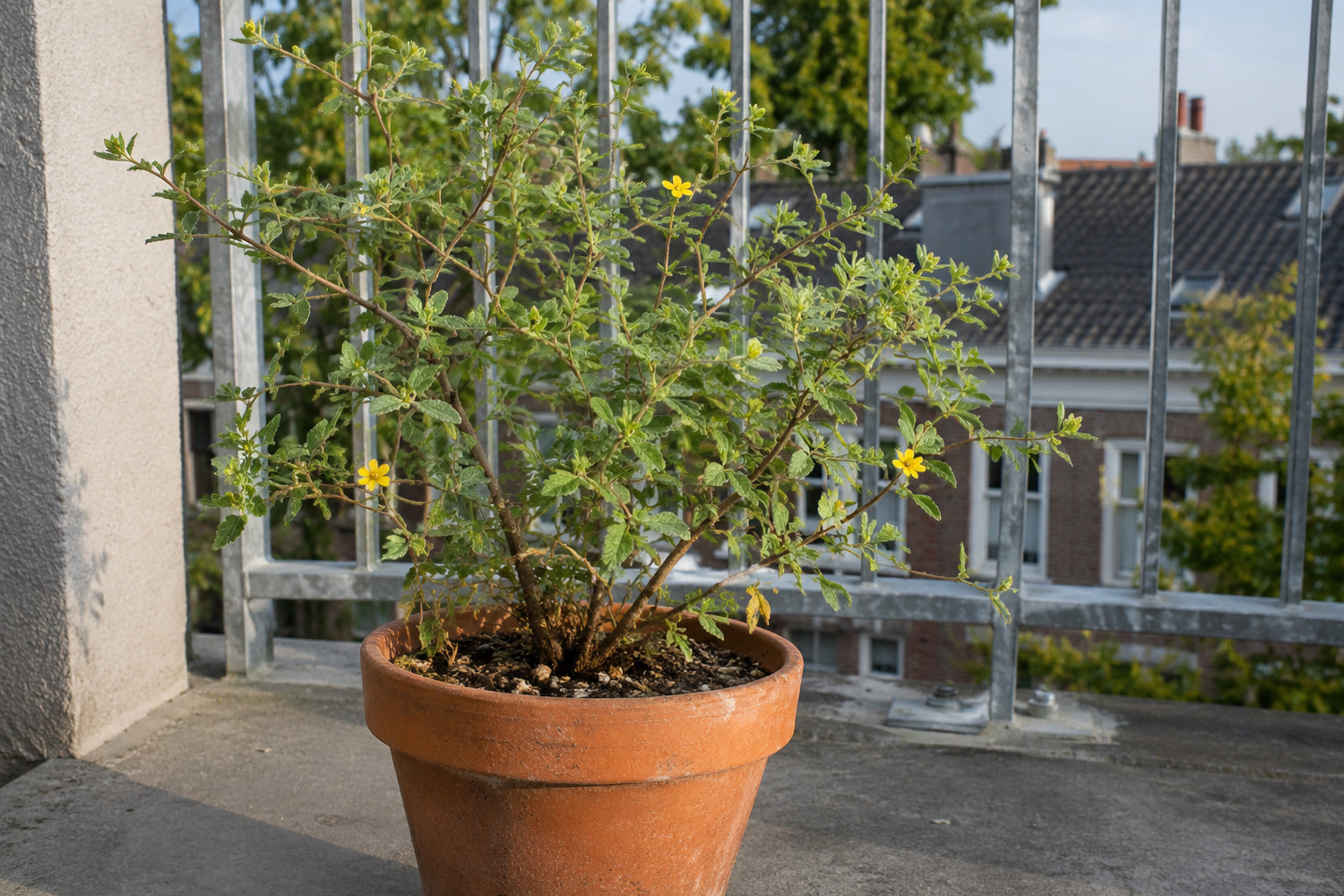
Damiana is a small, strongly scented Mexican shrub with tiny yellow flowers that has been drunk as a tea for centuries and even has its own liqueur in Mexico. The leaves smell strong and herbal, a little like chamomile. In this guide you'll learn what damiana actually is, how to recognise true damiana next to the plant that garden centres often sell under the same name, which form suits you, how to make damiana tea and what to keep in mind.
What is damiana?
Damiana (Turnera diffusa) is a low, woody shrub from the passionflower family (Passifloraceae), just like passionflower. It grows naturally in southern Texas, Mexico, Central and South America and the Caribbean, on dry, sunny slopes. The leaves are small, grey-green and toothed, with a hairy underside. Crush a leaf and it releases a strong, herbal scent. In summer, small yellow flowers appear, followed by small fruits that taste of fig.
In Mexico, damiana has been used for centuries in tea and in a herbal liqueur, sold in a bottle shaped like a female figure. In some places, bartenders use that liqueur in margaritas instead of orange liqueur. Damiana has a long reputation as a love herb. In the 19th century it was an ingredient in various patent medicines and tonics. Today it's mainly drunk as a tea and used in herbal blends.
True or false damiana?
Garden centres and webshops regularly sell a related species, Turnera ulmifolia, as damiana. It's also known as false damiana. Here's how to tell them apart:
| Damiana | False damiana | |
|---|---|---|
| Botanical name | Turnera diffusa | Turnera ulmifolia |
| Stem | Woody, a real shrub | Softer, less woody |
| Leaf | Small, about 1.5 centimetres long, grey-green, hairy underneath | Larger, blue-green, similar to an elm leaf |
| Flower | Small and yellow | Yellow and clearly larger |
| Scent of a crushed leaf | Strong and herbal | Weak |
| Use | Tea, herbal blends, liqueur | Mainly ornamental |
If you buy dried damiana, you get the leaves of Turnera diffusa. With a plant from a garden centre, it pays to check the flower size and the scent.
What's in it?
Damiana leaves contain essential oil, which gives the herbal scent, and flavonoids such as apigenin and acacetin. They also contain terpenes, phenolic compounds and small amounts of cyanogenic glycosides. Exactly which compounds are behind damiana's traditional reputation still isn't clear. Damiana has traditionally been used as a relaxing herb and a love herb. No health claims have been approved in the EU for damiana, so we don't promise any effects either.
Which form should you choose?
| Product | Form | Use | Best for |
|---|---|---|---|
| Damiana 50 grams | Dried leaf | Tea, 2 to 4 grams per cup | Anyone who wants to brew or blend their own tea |
| Damiana 10:1 extract | Concentrated extract, 3 grams | In hot water, as directed on the packaging | Anyone who wants to use less leaf |
| Damiana 1:1 extract | Tincture | Drops in water, as directed on the packaging | Anyone who doesn't want to brew tea |
| Damiana TPA alkaloid extract | Purified liquid extract | Drops, as directed on the packaging | Anyone looking for a concentrated, clear form |
| Damiana capsules | Capsules with extract | As directed on the packaging | Anyone who'd rather skip the taste |
You'll find more concentrated herbs among our herbal extracts, tinctures and liquid alkaloid extracts.
Making damiana tea in 5 steps
- Take 2 to 4 grams of dried damiana leaf, about 1 heaped tablespoon. Start with the smallest amount the first time.
- Pour a cup of boiling water over it, about 250 ml.
- Cover the cup, so the essential oil doesn't escape with the steam.
- Let the tea steep for 10 to 15 minutes.
- Strain out the leaves. The taste is herbal and slightly bitter. A teaspoon of honey or a cinnamon stick rounds it off.
Tasty combinations
Damiana goes well with warm, sweet flavours: cinnamon, cardamom, orange peel or a little cacao. For an evening tea, blend it with passionflower. You'll find more herbs to blend with among our relaxing herbs and in the tea category.
Damiana in a herbal blend
Dried damiana is also used in herbal blends for a vaporizer, because the leaf tastes mild and burns well. Set a vaporizer to around 190 °C. We don't recommend smoking it: any smoke puts a strain on your lungs, even without tobacco.
Growing damiana in the Netherlands
Damiana comes from a warm, dry climate and can't handle frost. In the Netherlands, keep it in a pot that goes outside in summer and indoors or into a greenhouse from October.
- Spot: full sun, as warm as possible. On a sunny patio or balcony in summer, on a bright windowsill in winter.
- Soil: poor, sandy and well-draining potting mix, for example cactus soil mixed with some regular potting soil.
- Water: little. Let the soil dry out almost completely between waterings, and give even less in winter.
- Propagation: cuttings are the easiest. In spring or summer, cut tips of about 10 centimetres and put them in moist, sandy soil somewhere warm.
- Harvest: pick the leaves in summer, while the plant is flowering. Dry them somewhere dark and airy or in a food dehydrator at no more than 35 °C, and store them in an airtight jar.
If you buy a plant, check that it really is Turnera diffusa: tiny flowers, small grey-green leaves and a strong scent.
Safety
- 18+: damiana is for adults only. Don't use it if you're pregnant or breastfeeding, and don't give it to children.
- Stick to the dosage: don't take more than the packaging says. If you feel unwell, stop.
- Medication: if you take diabetes medication or other medication, check with your doctor or pharmacist first.
- Don't combine with alcohol or other substances.
- Allergy: if you get itching or a rash, stop immediately.
Common mistakes
- Buying false damiana: a plant with large yellow flowers and little scent is usually Turnera ulmifolia.
- Too much at once: start with the smallest amount and see how you react.
- Steeping without a lid: the scent escapes with the steam.
- Keeping the plant too wet: damiana comes from a dry climate and rots in wet soil.
- Leaving the plant outside in winter: frost kills it.
- Storing the leaf open: the scent fades quickly. Use an airtight jar.
Frequently asked questions
What does damiana tea taste like?
Herbal, slightly bitter and a little sweet, with a scent that's somewhat reminiscent of chamomile. Honey or cinnamon makes it softer.
How much damiana do you use for tea?
About 2 to 4 grams of dried leaf per 250 ml cup, or the 10:1 extract as directed on the packaging. Start with the smallest amount.
Is damiana legal?
Yes. In the Netherlands damiana is freely available as a dried herb, extract and capsules. Dutch-Smart only sells it to customers aged 18 and over.
Is damiana related to passionflower?
Yes. Damiana belongs to the passionflower family (Passifloraceae), even though the plants look nothing alike.
Can you plant damiana in the garden?
Only in summer. Damiana can't handle frost, so keep it in a pot that comes indoors for winter.
Where can I buy damiana?
You'll find dried damiana among the relaxing herbs, the 10:1 extract among the herbal extracts, the 1:1 tincture among the tinctures, the TPA alkaloid extract among the liquid extracts and the capsules among the sexual stimulants.
Sources: Wikipedia (EN), Turnera diffusa, Wikipedia (EN), Turnera ulmifolia.


