


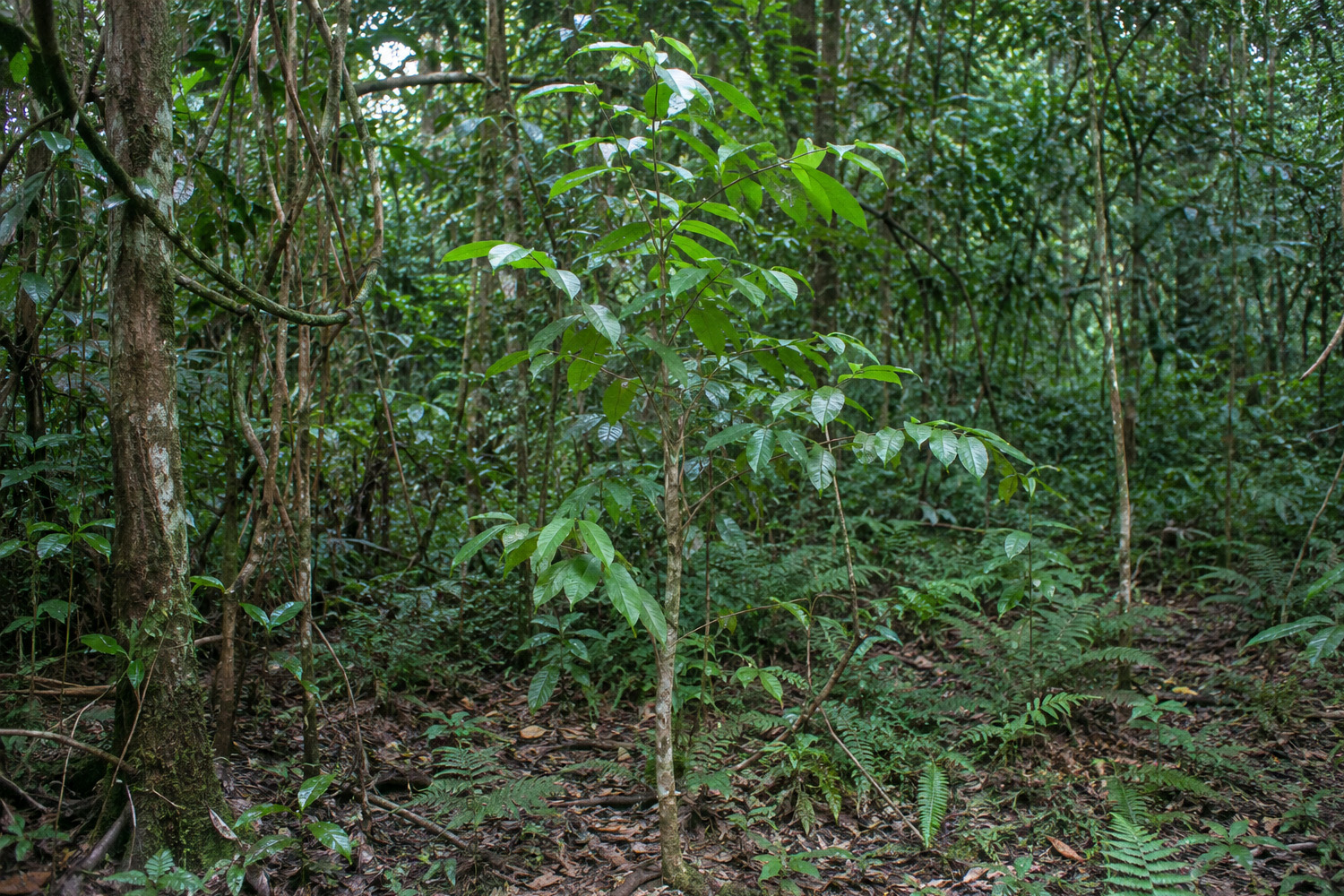
Muira puama is the dried root and bark of a small tree from the Amazon. In Brazil it has been called "potency wood" for generations. The herb is hard, woody and slightly salty in taste, and you don't make an ordinary tea from it: you boil it. In this guide you'll learn what muira puama actually is, how it differs from catuaba, which form suits you, how to make a decoction and what to keep in mind.
What is muira puama?
Muira puama is the trade name for the root and bark of Ptychopetalum olacoides, a shrub or small tree from the Olacaceae family. The plant grows in the Amazon rainforest of Brazil and neighbouring countries and reaches about four metres at most. The leaves are up to 7 or 8 centimetres long, light green on top and dark brown underneath. Short clusters of four to six small flowers grow in the leaf axils.
In Brazilian folk medicine the root has long been used as a strengthening remedy, and since the 1930s it has also been known in Europe as a love herb. In Brazil, muira puama is part of the well-known herbal tonic Catuama. Locally the plant is also called marapuama or muirapuama. The related species Ptychopetalum uncinatum is sometimes sold under the same trade name.
Muira puama or catuaba?
Muira puama and catuaba are often mentioned in the same breath. Both come from Brazil, both are bark or wood, and Catuama contains both. Yet they're completely different plants:
| Muira puama | Catuaba | |
|---|---|---|
| Botanical name | Ptychopetalum olacoides | A collective name: including Erythroxylum catuaba and Trichilia catigua |
| Family | Olacaceae | Varies by species |
| Plant part | Root and root bark | Bark |
| Origin | Amazon region | Brazil |
| Taste | Woody, slightly salty and sharp | Woody |
| At Dutch-Smart | Root bark, two extracts, capsules | Catuaba bark and an alkaloid extract |
Because "catuaba" is used for several tree species, a good product always states the botanical name. The same goes for muira puama.
What's in it?
Plant sterols, terpenes and a small amount of essential oil have been found in muira puama root, among other things. There's little good research on its use in humans. Studies mainly focus on lab animals. No health claims have been approved in the EU for muira puama, so we don't promise any effects either.
Which form should you choose?
| Product | Form | Use | Best for |
|---|---|---|---|
| Muira puama root bark 50 grams | Dried and cut | Decoction, 1 to 2 tablespoons per half litre | Anyone who wants to prepare it the traditional way |
| Muira puama extract 4:1 | Extract powder, 3 grams | In hot water, as directed on the packaging | Anyone who doesn't want to boil it |
| Muira puama extract 10:1 | Stronger extract powder, 10 grams | In hot water, as directed on the packaging | Anyone who wants to use a smaller amount |
| Muira puama capsules | Capsules | As directed on the packaging | Anyone who'd rather skip the taste |
You'll find more herbs with a similar tradition among our love herbs and sexual stimulants. Concentrated forms are among our herbal extracts.
Making a muira puama decoction in 5 steps
Root bark is hard and fibrous. If you just pour hot water over it, very little comes out. That's why you boil it briefly, just like other roots and barks.
- Put 1 to 2 heaped tablespoons of cut root bark in a small pan with half a litre of water. Start with the smallest amount the first time.
- Bring the water to the boil.
- Turn the heat down and let it simmer gently for fifteen minutes, with a lid on the pan.
- Strain out the bark.
- Divide the decoction over two glasses. The taste is woody and somewhat sharp. A little honey or a cinnamon stick softens it.
Tasty combinations
Muira puama goes well with warm spices such as cinnamon, ginger and cloves. In Brazil it's often combined with guarana, as in Catuama. Keep in mind that guarana contains caffeine. If you want to keep it mild, blend it with damiana.
Storing a decoction
A decoction keeps for a day or two in a closed bottle in the fridge. It's better to make a small amount fresh than a large batch.
Where does it come from?
Muira puama is harvested from the wild in the Amazon region. To get the root, the plant has to be dug up. So buy from a shop that states the botanical name and origin, and don't use more than you need. Growing it yourself isn't realistic in the Netherlands: the plant needs a tropical rainforest climate and seed is almost impossible to get in Europe.
Safety
- 18+: Dutch-Smart only sells muira puama to customers aged 18 and over. Don't give it to children.
- Pregnant or breastfeeding: don't use it. Its safety hasn't been established.
- Little research: little is known about side effects in humans. Have no more than one half-litre decoction a day, follow the packaging for extracts and capsules, and stop if you feel unwell.
- Heart and blood pressure: if you have heart problems or high blood pressure, check with your doctor first, especially if you combine it with guarana.
- Medication: if you take medication, check with your doctor or pharmacist first.
- Don't combine with alcohol or other substances. If you combine it with guarana, keep the caffeine in mind.
Common mistakes
- Only steeping it: root bark needs boiling. Just pouring hot water over it gives a weak infusion.
- Too much at once: start with the smallest amount and see how you react.
- Mixing up muira puama and catuaba: they're different plants with a different composition.
- Dosing extract like ordinary bark: a 10:1 extract is much stronger than the dried herb. Follow the packaging.
- Leaving a decoction for days: make it fresh and keep it in the fridge for two days at most.
- Buying without a botanical name: choose a product that says Ptychopetalum olacoides.
Frequently asked questions
What does muira puama mean?
The name comes from an indigenous language of Brazil and is usually translated as "potency wood".
What does muira puama taste like?
Woody, slightly salty and a little sharp. Honey or cinnamon makes the decoction softer.
How do you make muira puama tea?
Simmer 1 to 2 heaped tablespoons of cut root bark gently for fifteen minutes in half a litre of water and strain it. With extract powder, follow the packaging.
Can you grow muira puama yourself?
Not in the Netherlands. The plant needs a tropical rainforest climate and seed is almost impossible to get in Europe.
What's the difference between the 4:1 and the 10:1 extract?
The number shows how much herb went into the extract. With 4:1, 4 grams of herb is concentrated into 1 gram of extract; with 10:1 it's 10 grams. So the 10:1 extract is stronger per gram.
Where can I buy muira puama?
You'll find the root bark among the love herbs, the 4:1 extract and the 10:1 extract among the herbal extracts, and the capsules among the sexual stimulants.
Sources: Wikipedia (EN), Muira puama, Drugs.com, Muira puama.


